More Than a Cap: The Hidden Network Beneath Your Feet
The cap and stem are only a temporary reproductive organ. A fungus's real life is a branching mycelial network that digests its food outside the body.
- Section
- Biology
- Date
- Reading
- 11 minutes
- Source
- Ferguson et al., 2003
In a forest in northeastern Oregon, researchers found an unusual giant. It did not tower over the trees: its presence was betrayed by infected roots. In a 2003 study, samples of the fungus Armillaria ostoyae from an area of roughly 965 hectares were assigned to a single genet, a genetically uniform individual of clonal origin. That is about 9.65 square kilometers. But nobody has seen a cap that size: what was measured was the spread of a fungus hidden within the forest system. Ferguson et al., 2003.
This story helps correct a familiar picture. Many fungi have a cap and stem, a temporary fruiting body that serves reproduction. Everyday life goes on in the mycelium: a network of thin, branching threads. The fungus claims space by growing, takes in ready-made organic matter, and can interact with its neighbors in very different ways. To understand it, it is more useful to follow the flows of food than to examine a single cap. Kew: what fungi are.
A separate kingdom with an unusual way of feeding
Fungi were long grouped with plants: they are usually immobile and have a cell wall. But they form a kingdom of their own and are evolutionarily closer to animals than to plants. This kinship does not make a fungus a small animal: it is a matter of shared ancestry, not of similar behavior. Kew.
Fungal cells have nuclei and mitochondria, but no chlorophyll or chloroplasts. Their cell wall contains chitin and glucans, tough complex carbohydrates. Chitin is also found in the outer skeleton of arthropods, yet the fungal wall is built differently from an insect's shell. And the presence of one substance does not by itself prove close kinship. OpenStax: characteristics of fungi.
The common name hides very different forms of life. Baker's yeast is mostly single-celled. Molds form filaments, but not the familiar forest caps. So the statement "a fungus consists of a stem and a cap" describes only a small fragment of fungal diversity. Even for a mushroom-forming fungus, it leaves out the part that gathers nourishment. OpenStax.
Digest first, absorb later
Consider a thought experiment: a piece of wood with a fungus growing next to it. A large molecule of wood polymer cannot simply be carried whole across a cell membrane. The fungus secretes enzymes, molecules that speed up particular chemical reactions. They break down the available complex substances, after which the cells absorb the small dissolved compounds. Not every fungus can break down every kind of wood: enzyme repertoires differ. OpenStax: ecology of fungi.
The sequence looks like this: substrate → enzymes acting outside the cell → small molecules → absorption. Here the substrate is the material on or inside which the fungus lives. It may be a fallen leaf, wood or the tissue of a living organism.
That is why a fungus can usefully be compared to a digestive system turned inside out. The analogy has limits: a fungus has no stomach set apart from its body, and the reactions take place at the surface of the cells and in the surrounding environment. Water matters for the transport of substances; a shortage of moisture can limit active growth. OpenStax.
How to find food when you cannot walk
A fungal thread is called a hypha. It lengthens mainly at its tip and branches, and many hyphae together form a mycelium. This geometry creates a large contact surface with the environment. In many fungi, the interiors of neighboring segments are connected through openings in the cross-walls; the structure of hyphae differs among groups. OpenStax.
Here is another hypothetical example: nutritious wood lies in patches, with poor soil in between. A single cell would struggle to make use of a distant supply. A connected network can support growing regions with resources obtained elsewhere. The fungus, as it were, leaves part of its body at the food it has found while continuing to search further.
In 2020, researchers built a model of this kind of feeding. It showed the advantages of a filamentous organization when resources are immobile, poor in nutrients and hard to digest. This is a plausible mechanistic explanation for the success of hyphae, not an experimental re-creation of the entire evolution of fungi. Heaton, Jones and Fricker, 2020.
A network does not have to be uniform: growth can differ between rich and poor patches. In some species, hyphae gather into cords, larger structures that allow the fungus to cross unfavorable gaps between food sources. So the picture of "an even web under all the ground" is also too simple. Australian National Botanic Gardens: mycelium.
Four roles: recycler, partner, parasite and predator
Decomposers obtain nourishment from dead organic material. Together with other organisms, they return the elements bound in it to the biological cycle. Fallen leaves and dead wood become part of the next cycle of life. This is not instant cleanup: the pace depends on the material, the conditions and the community of decomposers. OpenStax.
Mycorrhizal partners are linked to plant roots. Mycorrhiza literally means "fungus root." The hyphae help the plant obtain water and mineral elements from the soil, while the plant supplies the fungus with the products of photosynthesis. Such a contact differs from a root on its own: two organisms take part in it. Kew: the hidden world of mycelium.
In a 2011 experiment by Toby Kiers and colleagues, plants directed more carbohydrates to the more beneficial fungal partners, and the fungi shifted the transfer of nutrients in favor of the roots that provided more carbohydrates. Comparing this to trade is useful if we remember that there are no conscious buyers here. What was observed was a regulated physiological process in a specific experimental system. Kiers et al., 2011, abstract.
Parasites exploit a living host and can harm it. The Oregon Armillaria from the introduction is the cause of a root disease, not a universal benefactor of trees. The same outward image of a mycelium says nothing about whether a particular fungus is beneficial to a particular neighbor. Ferguson et al..
Predatory fungi take a further, unexpected step: they trap animals. In Arthrobotrys oligospora, the targets are nematodes, tiny roundworms. When nutrients are scarce, signals from nematodes can trigger the formation of sticky trapping nets. This is an active restructuring of the growth form, even though the fungus runs nowhere. Kuo et al., 2024.
That study identified families of cell receptors involved in recognizing different prey signals. Altering the corresponding genes disrupted trap formation, helping to link the signal to the response. "The fungus sensed the worm" here means the operation of molecular mechanisms. It is not evidence of intent, nor a guarantee that the same fungus will automatically protect any garden bed from nematodes. Kuo et al..
These four roles are a convenient map of relationships, not four impermeable boxes. For example, the ability of one species both to feed on dead material and to turn to predation shows how much behavior depends on conditions.
The ant, the fungus and the limits of the word "zombie"
Some Ophiocordyceps change the behavior of infected ants: before dying, the ants fasten themselves to vegetation with a bite. This helps the parasite complete its life cycle. But the popular picture of "a fungus taking over the brain and working the remote control" turned out to be too simplistic.
In a 2017 study, scientists reconstructed the tissues of infected ants in three dimensions. Fungal cells were present in different parts of the body, joined into networks around muscle fibers and sometimes penetrated them. At the same time, no fungal cells were found inside the brain in the samples examined. Fredericksen et al., PNAS, 2017.
This does not mean the brain is unaffected: substances can act without fungal cells physically penetrating it. The work describes where the parasite is located and raises questions about the mechanism; it does not fully explain how behavior is controlled. Here it is especially important to distinguish what was seen under the microscope from an explanation that is still being tested.
What a giant fungus really means
Back to Oregon. The 965 hectares are an estimate of the area over which a single genet spreads in the 2003 study. It is not a continuous carpet of uniform thickness, nor a direct weighing of the organism. The authors separately discussed how continuously the fungus is present within the presumed boundaries.
The age was estimated from the distances between finds and different rates of spread. The result was a range of roughly 1,900 to 8,650 years. It reflects how the calculation depends on assumptions; it is not an exact birth date established from tree rings. It is more accurate to speak of one of the largest known fungal individuals by area occupied than to declare a winner among all living things by every possible measure. Full text of Ferguson et al..
The "wood wide web": a good metaphor needs brakes
Fungal connections between the roots of different plants do exist. But it does not follow that an entire forest is joined into a permanent network through which mature trees tenderly feed their offspring.
In a critical review in 2023, Justine Karst, Melanie Jones and Jason Hoeksema showed that a number of popular generalizations run ahead of the field evidence. Detecting the transfer of a substance does not in itself establish either the exact route or the benefit to the recipient. Alternative explanations are possible, including transfer through the soil solution or changes in the surrounding fungal community. Karst et al., author's copy of the paper.
The debate continues. In a 2025 reply, Suzanne Simard and colleagues object to how the critical review selected studies and point to a body of field, laboratory and greenhouse results that support the existence of the networks and the transfer of resources. They stress that the effects depend on forest type and conditions. This is a reasoned position paper by participants in the debate, not a new universal proof. Simard, Ryan and Perry, 2025.
The strong objection to excessive skepticism is a fair one: limited evidence for universal mutual aid does not cancel out mycorrhiza, physiological exchange or the existence of some shared networks. My takeaway from this debate is that one has to examine the specific experiment: what was measured, how the transfer pathways were separated, and what outcome the organism got. A metaphor helps us picture a connection, but it does not replace testing what that connection does.
What you can see on an ordinary walk
Try an observation that needs no digging: photograph fruiting bodies and their position relative to wood, trees and open lawn. Then come back at another time. The aim is to separate the visible reproductive structure from the hidden organism. The disappearance of caps does not in itself prove that the mycelium has disappeared. Kew.
If you see a ring of mushrooms, look at its edge. In some species, such an arrangement reflects the expanding front of mycelial growth. It is a readable trace of a process that is usually hidden. But the diameter cannot reliably give you the age without knowing the growth rate and conditions; nor does a ring establish which fungus species it is. Australian National Botanic Gardens.
For reading science news, one more technique is handy: translate the vivid verb into a measurable process. "Trades": how did the transfer of substances change? "Communicates": what signal was detected? "Hunts": were the trap, the capture and the feeding shown? Such a translation preserves the wonder and removes the excess certainty.
A fungus has no single mandatory outline resembling ours. It may be a single cell, a network in wood or a partner at the roots. Its strangeness lies in its way of existing: growing toward a resource, transforming its surroundings chemically and linking patches of space with living threads. The cap makes this life visible. Understanding begins when the eye goes deeper.
Liked it? Save it for later.
 Biology · 19.10.26
Why Cats Purr and What the Sound Really Means
 Medicine · 05.10.26
How Helicobacter pylori Survives Stomach Acid
 Medicine · 03.10.26
What DNA Tests Can Actually Reveal
 Culture · 27.10.26
Why One Family Can Have Different Surnames
 Culture · 18.10.26
How PR Works: Mechanisms, Limits and Trust
 Society · 18.10.26
Cypriot Pound or Lira: A Currency with Two Names
 Body · 18.10.26
The Art of the Pause: How to Speak Calmly and Confidently
 Technology · 16.10.26
The Life Cycle of a Star: From Nebula to Black Hole
 Body · 15.10.26
Who Pays for Heat: Why a Lizard Can Be Hotter Than a Bird
 Technology · 15.10.26
How Vector Search Works: Chroma, pgvector and Qdrant
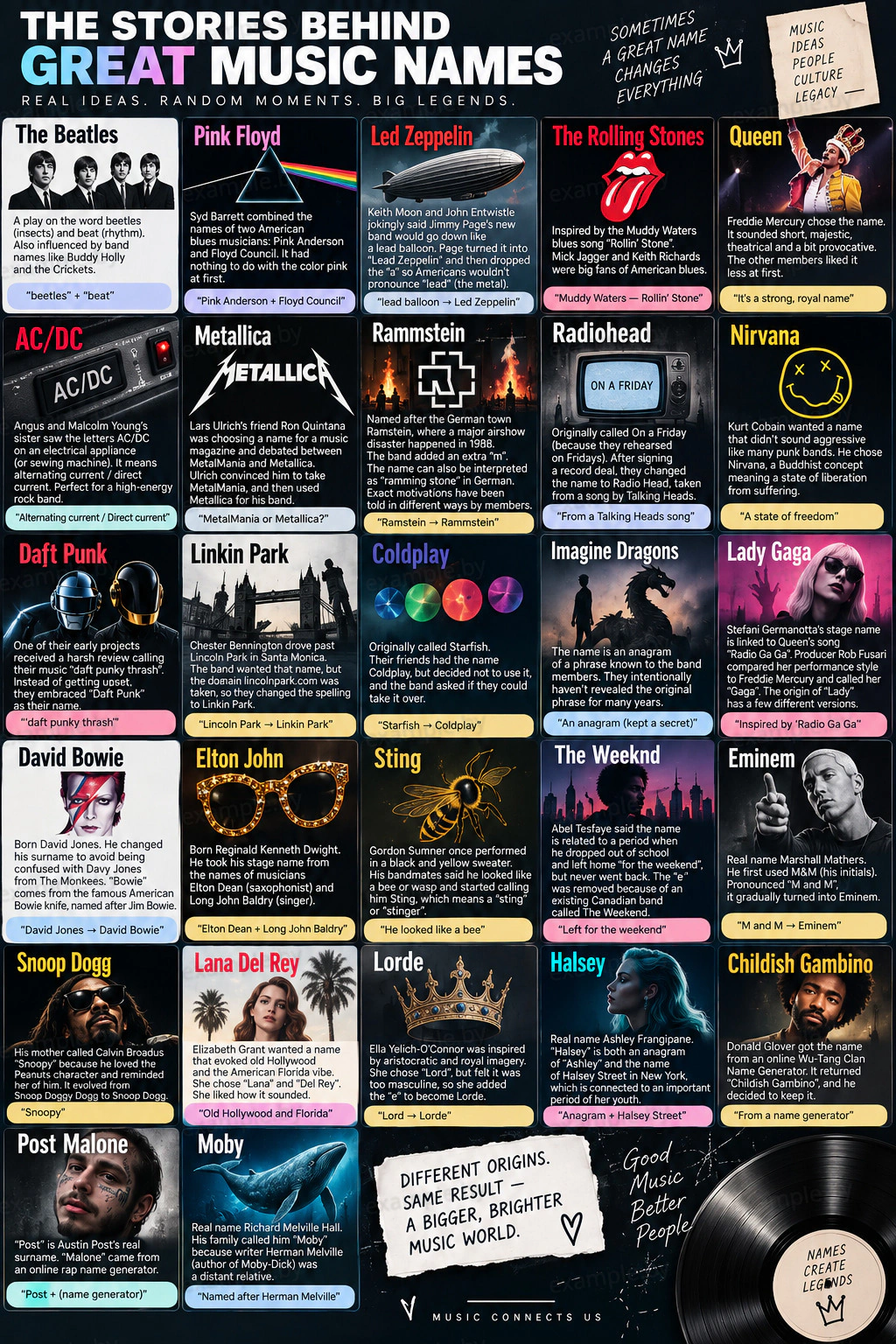 Culture · 13.10.26
How Iconic Bands and Artists Got Their Names
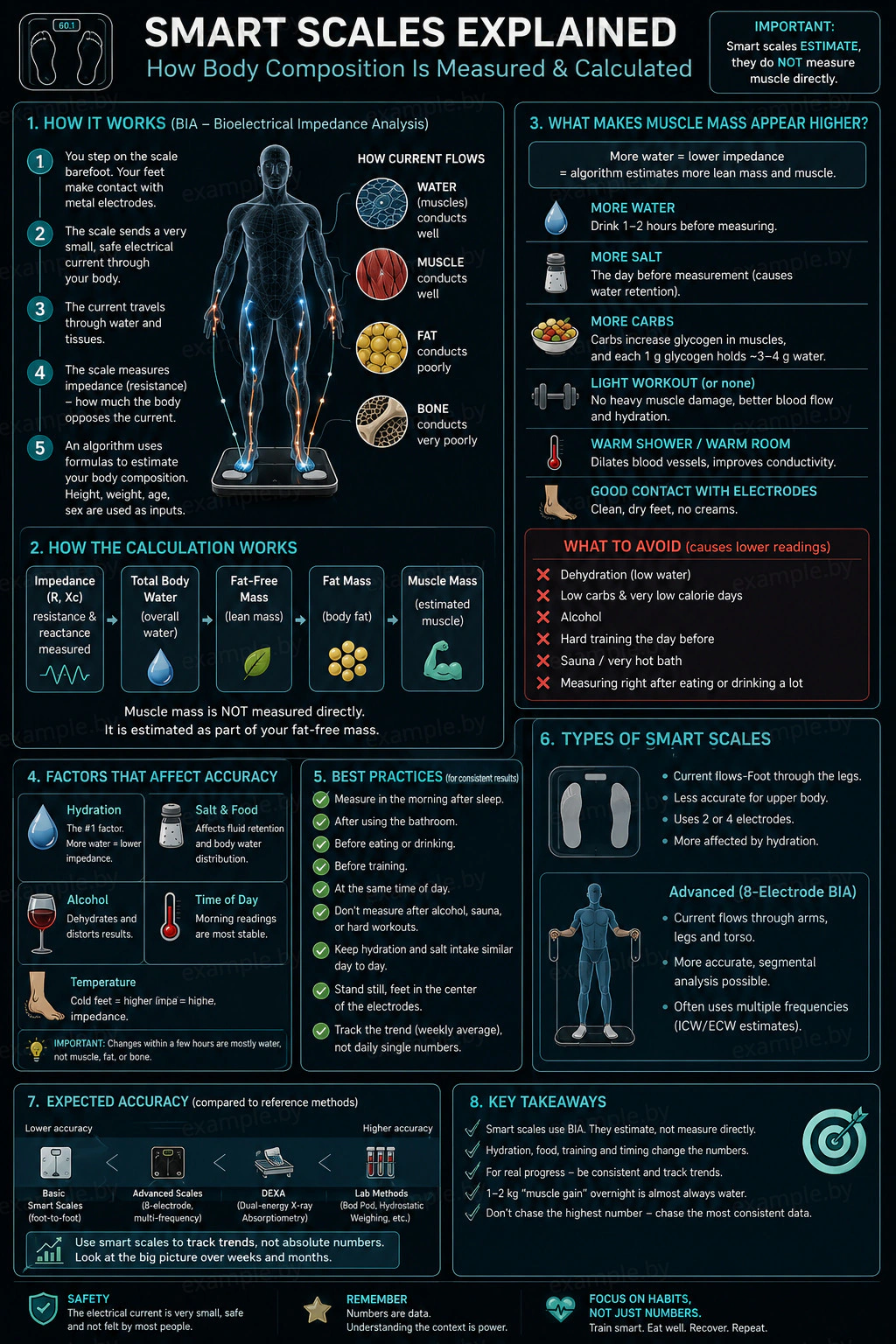 Technology · 13.10.26
How Smart Scales Track Muscle and Water