How Helicobacter pylori Survives Stomach Acid
Using urease to neutralize acid, H. pylori fuels chronic inflammation. Here is how it causes ulcers and cancer, and why post-treatment testing is essential.
- Section
- Medicine
- Date
- Reading
- 10 minutes
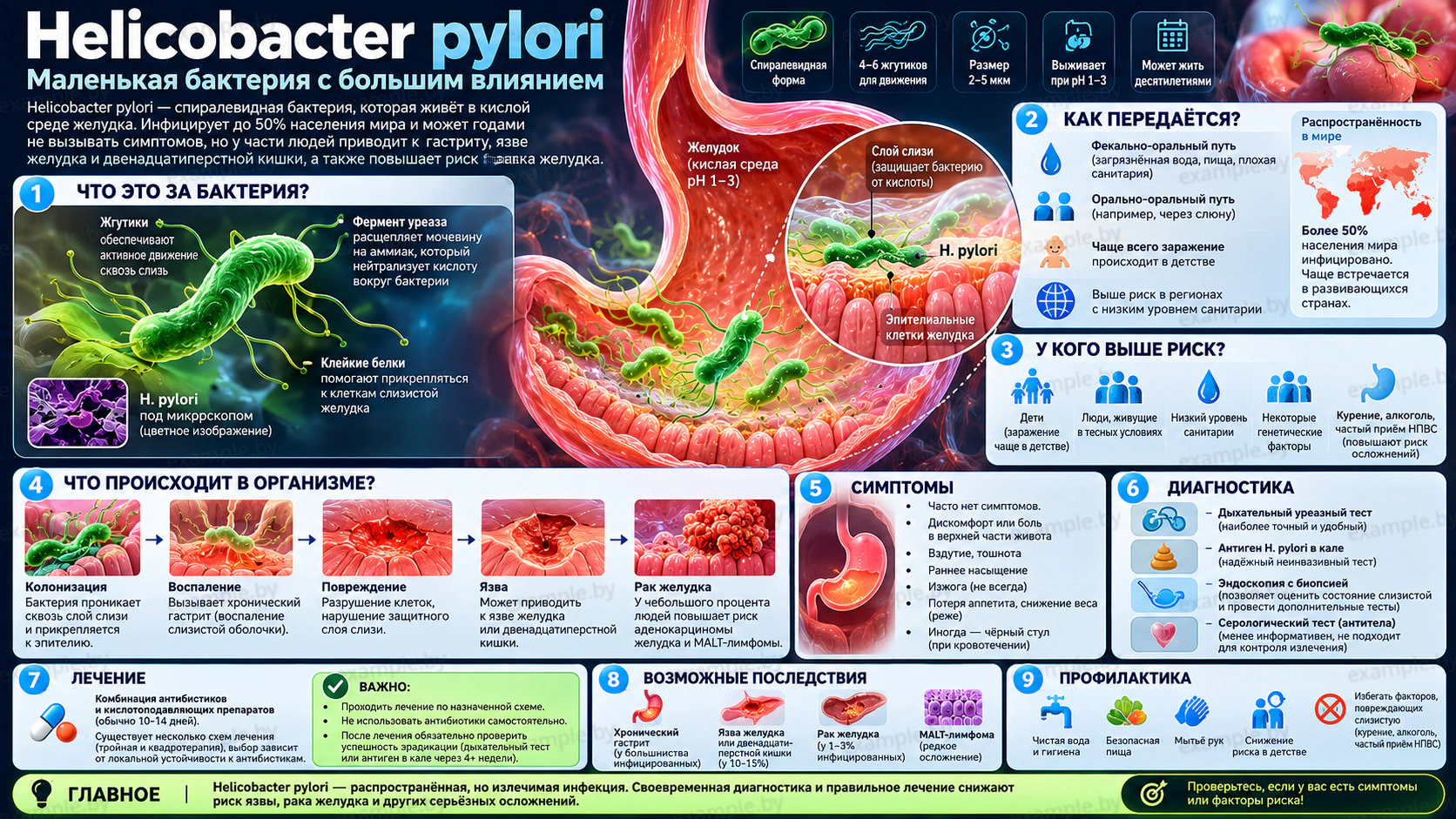
Helicobacter pylori—one of the most unusual bacteria in the human body—can live for decades in a stomach with a pH of around 1–3. It causes chronic gastritis in nearly everyone infected, leads to ulcers in some, and long-term infection is an established cause of certain types of stomach cancer. Yet most carriers feel nothing for years, and eliminating the bacterium in time lowers the risk of dangerous complications (Cancer.gov).
How the Bacterium Survives in the Stomach
Gastric juice is extremely acidic. In the lumen of the stomach, pH can range from roughly 1–3. For most bacteria, this is a fiercely inhospitable environment.
But H. pylori does not just tolerate acid.
It creates a small chemical “protective bubble” around itself.
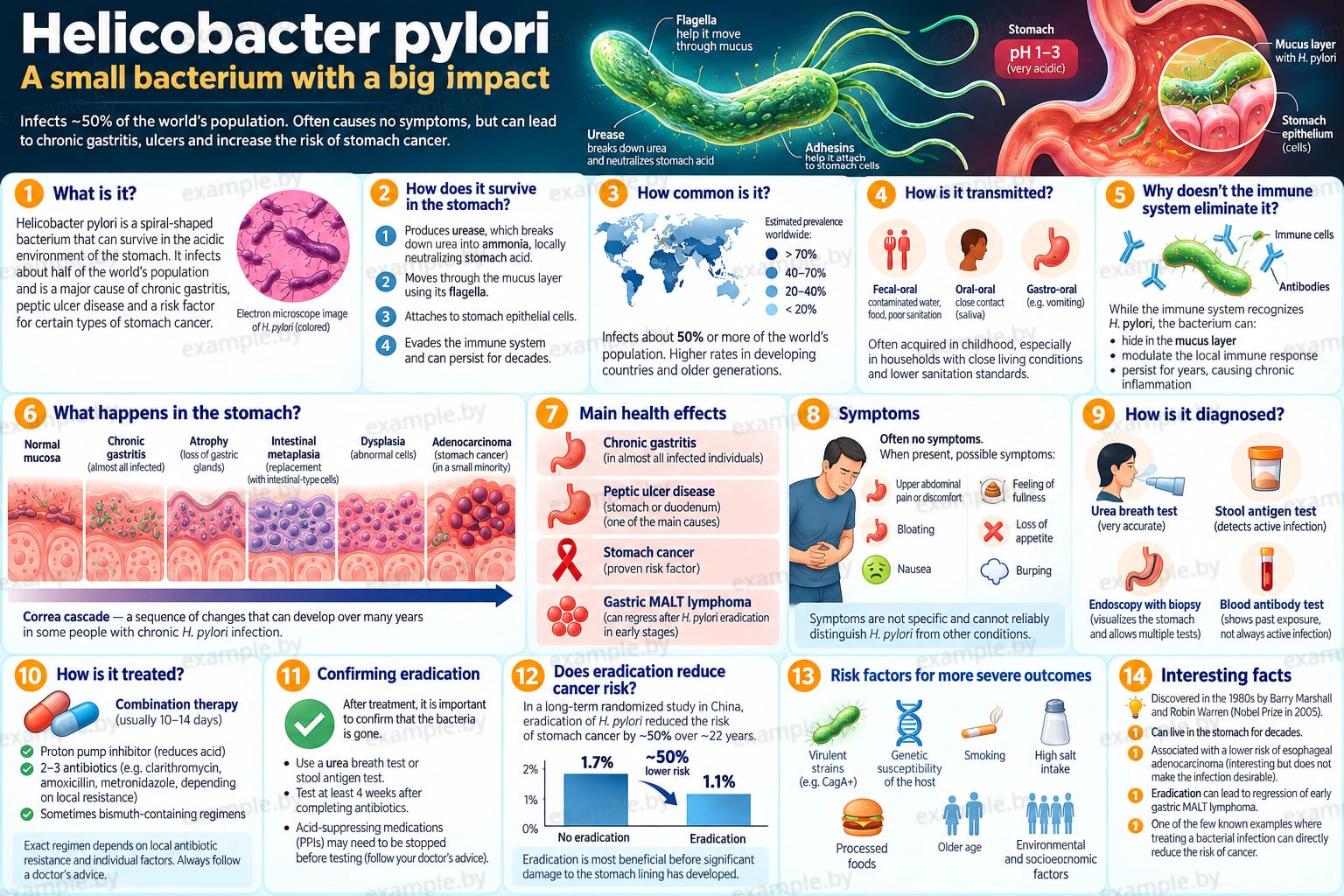
The bacterium’s main weapon is the enzyme urease. It breaks down urea into ammonia and CO₂. Ammonia neutralizes acid locally, raising the pH right around the bacterium.
In other words, H. pylori does not make the entire stomach less acidic. It alters the microenvironment around itself. (Cancer.gov)
But there is another trick.
The bacterium is spiral-shaped and has multiple flagella that let it propel itself through gastric mucus. The closer it gets to the epithelial surface, the less extreme the acidity becomes.
The result is a multistep strategy:
acidic stomach → urease → local acid neutralization → movement through mucus → attachment to epithelium → long-term colonization.
This is precisely why the infection can persist for decades.
How Common Is It
Extremely.
Estimates suggest that H. pylori is present in roughly half or even more of the world’s population, though prevalence varies widely across countries and generations. The infection is substantially more common where crowded living conditions, inadequate sanitation, and clean water shortages have historically existed. (Cancer.gov)
What is especially fascinating is something else:
infection often occurs in childhood.
A person can acquire the bacterium at age 5–10 and only discover it at 40–50.
Without treatment, the infection often becomes chronic.
How the Infection Is Transmitted
Several routes are most likely:
fecal-oral, oral-oral, and gastro-oral, such as contact with vomitus.
Consequently, transmission is closely tied to close domestic contact and sanitary conditions. (Cancer.gov)
But the popular notion:
“I caught Helicobacter at a specific restaurant yesterday”
is usually far too simplistic.
In many adults, the infection began many years ago, often during childhood.
Why the Immune System Fails to Clear It
This is where H. pylori becomes even more intriguing.
The immune system detects it.
Immune cells arrive.
Inflammation begins.
Yet the body is often incapable of eliminating the bacterium entirely. H. pylori can attach to the epithelium, live within the mucus layer, and interfere with the local immune response. (Cancer.gov)
A peculiar standoff emerges:
the bacterium persists → the immune system keeps attacking → inflammation continues for years.
And it is this chronic inflammation that becomes a key driver of future tissue damage.
What Happens to the Stomach Wall
The typical chain of events looks roughly like this:
H. pylori
↓
chronic active gastritis
↓
in some people
mucosal atrophy
↓
intestinal metaplasia
↓
dysplasia
↓
in a small subset of patients
gastric adenocarcinoma
This sequence is known as the Correa cascade.
Yet it is crucial not to draw the wrong conclusion here.
H. pylori ≠ cancer.
The majority of infected people will never develop gastric cancer.
The risk depends on many variables:
the bacterial strain, host genetics, duration of infection, mucosal health, smoking, diet, salt intake, and other factors.
For example, some strains carry the CagA protein, which can inject itself into gastric epithelial cells and alter cellular signaling pathways. CagA-positive strains are more strongly associated with certain forms of gastric cancer. (Cancer.gov)
A Carcinogen Among Microbes
Back in 1994, the International Agency for Research on Cancer classified H. pylori as a human carcinogen.
The association is particularly well established for:
gastric adenocarcinoma
and
gastric MALT lymphoma. (Cancer.gov)
This makes H. pylori remarkably unusual.
We tend to imagine a carcinogen as cigarette smoke, ultraviolet light, or a chemical substance.
Yet a carcinogen can also be a living microorganism.
According to data from a major international H. pylori genomics project, chronic infection accounts for an enormous share of the global gastric cancer burden. (DCEG)
Why Outcomes Differ Between People
Because three systems interact simultaneously:
🦠 The Bacterium
Different strains have different virulence.
🧬 The Host
Genetic factors dictate the strength of the inflammatory response and mucosal susceptibility.
🌍 The Environment
Smoking, high salt intake, diet, and other exposures can modify the risk.
For instance, smoking in infected individuals is linked to an additional rise in gastric cancer risk, while high consumption of salt and certain processed foods is also associated with elevated risk. (Cancer.gov)
As a result, two people harboring the exact same bacterium can experience drastically different outcomes.
The Link to Peptic Ulcer Disease
Before the discovery of H. pylori, peptic ulcers were often attributed primarily to stress, acidity, and lifestyle.
Discovering the bacterium transformed gastroenterology.
Today we know that H. pylori is one of the leading causes of gastric and duodenal ulcers.
And that fundamentally changed treatment.
Previously, the only option was to suppress acid indefinitely.
Now, in many cases, doctors can eliminate the underlying infectious cause itself.
The History of Discovery
Australian researchers [check: missing names of the discoverers; based on context, Robin Warren and Barry Marshall] identified bacteria in the stomachs of gastritis patients in the early 1980s.
The scientific community was initially skeptical: conventional wisdom held that bacteria simply could not survive in such an acidic environment.
Their discovery ultimately redefined our understanding of peptic ulcer disease.
In 2005, Marshall and Warren were awarded the Nobel Prize in Physiology or Medicine for this work.
Symptoms of Infection
Here lies another paradox.
Often, none at all.
A person can be infected for decades and feel completely fine.
When symptoms do appear, they may include:
pain or discomfort in the upper abdomen, early satiety or fullness, nausea, bloating, reduced appetite, and dyspepsia.
But these symptoms are not specific to H. pylori.
It is impossible to reliably confirm the bacterium’s presence based on how one feels.
How H. pylori Is Diagnosed
There are four main approaches.
💨 Urea Breath Test
The patient ingests carbon-labeled urea.
If H. pylori is present, its urease breaks down the urea, and the reaction products can be detected in exhaled breath.
A brilliant example of turning a bacterium's unique biochemistry into a diagnostic tool.
🧪 Stool Antigen Test
Identifies active infection and is also used to evaluate post-treatment eradication.
🔬 Endoscopy and Biopsy
Enables direct visualization of the gastric lining while obtaining mucosal tissue samples for evaluation.
It is especially critical when alarm symptoms are present or when mucosal damage needs assessment.
🩸 Blood Antibody Tests
The drawback of serology is that antibodies can linger long after the bacterium has been eliminated.
As a result, a positive test does not necessarily indicate an active infection.
Why Confirming Eradication Matters
Because taking antibiotics ≠ guaranteed eradication.
H. pylori develops antibiotic resistance.
That is why contemporary clinical guidelines emphasize the need to confirm eradication.
This is typically done with a breath test, a stool antigen test, or a biopsy-based test. Testing is performed no sooner than approximately four weeks after finishing antibiotics; acid-suppressing medications may need to be temporarily stopped beforehand as instructed by a physician. (American College of Gastroenterology)
This reflects an important principle:
treating is not enough → you must prove the bacterium is gone.
How the Infection Is Treated
A single antibiotic is rarely sufficient.
Treatment relies on multi-drug regimens combining acid suppressants with several antimicrobial agents; some regimens also include bismuth.
The specific regimen depends on regional resistance patterns, prior antibiotic exposure, and the likelihood of bacterial resistance.
Antibiotic resistance is precisely what made the old “one-size-fits-all” approach increasingly unreliable. (American College of Gastroenterology)
Does Eradication Lower Cancer Risk?
Yes.
This is one of the most critical findings in H. pylori research.
In a long-term randomized trial in China's Shandong province, eradicating the infection was associated with an almost 50% reduction in gastric cancer incidence over roughly 22 years of follow-up. (Cancer.gov)
Another review of randomized trials found a decline in absolute cancer incidence from roughly 1.7% to 1.1% across studied high-risk populations. (Cancer.gov)
This does not mean antibiotics are a “cancer pill.”
It points to something far more profound:
clearing a single chronic infection can alter the likelihood of developing cancer decades down the line.
What if the Mucosa Is Already Damaged?
This introduces the concept of a biological point of no return.
The earlier the infection is cleared, the greater the potential preventive benefit.
If advanced atrophy or intestinal metaplasia has already developed, eradicating the bacterium is still beneficial, but some of the accumulated mucosal damage may persist.
For this reason, some patients require ongoing surveillance after treatment.
The Link to MALT Lymphoma
There is an even more striking example.
Chronic stimulation of gastric lymphoid tissue by H. pylori can trigger a rare malignancy: gastric MALT lymphoma.
In certain early-stage cases, eradicating the bacterium with antibiotics leads to tumor regression.
It is one of the rare instances where treating a bacterial infection can directly reverse a neoplastic process. (Cancer.gov)
The Paradox of the Microbe
At first glance, a question arises:
If the bacterium is so harmful, why didn't evolution weed it out?
H. pylori has coexisted with humans for an extraordinarily long time.
Throughout most of human history, it likely had little impact on reproductive success: severe complications typically arise long after childbearing years.
Moreover, our relationship with the microbiome is far more nuanced than a simplistic divide between "good" and "bad" bugs.
For example, chronic H. pylori infection is statistically associated with a lower risk of esophageal adenocarcinoma, though that by no means makes harboring the infection desirable. (Cancer.gov)
A single microorganism can increase the risk of certain diseases while correlating with a decreased risk of others.
The Key Takeaway
Helicobacter pylori illustrates how misguided it is to view disease as a simplistic formula:
bacterium → illness.
The reality is far more intricate:
childhood infection
→ decades of coexistence
→ chronic inflammation
→ interplay between bacterial and host genetics
→ environmental influences
→ no serious issues for the majority
→ ulcers for some
→ precancerous changes for a small subset
→ cancer for an even smaller fraction.
And intervening in this sequence can alter what happens decades later.
This is why H. pylori stands as one of the clearest examples linking infection, immunity, evolution, and oncology.
Key Facts to Remember
H. pylori can survive for decades where most bacteria perish; its urease generates a locally less acidic environment; the infection is often acquired in childhood; an absence of symptoms does not mean an absence of inflammation; the bacterium is an established cause of peptic ulcer disease and a major risk factor for stomach cancer; eradicating the infection reduces this risk; and after treatment, it is essential to confirm that eradication actually succeeded. (Cancer.gov)
Liked it? Save it for later.
 Medicine · 03.10.26
What DNA Tests Can Actually Reveal
 Medicine · 11.10.26
Why Gums Bleed and Where the Real Danger Begins
 Medicine · 11.10.26
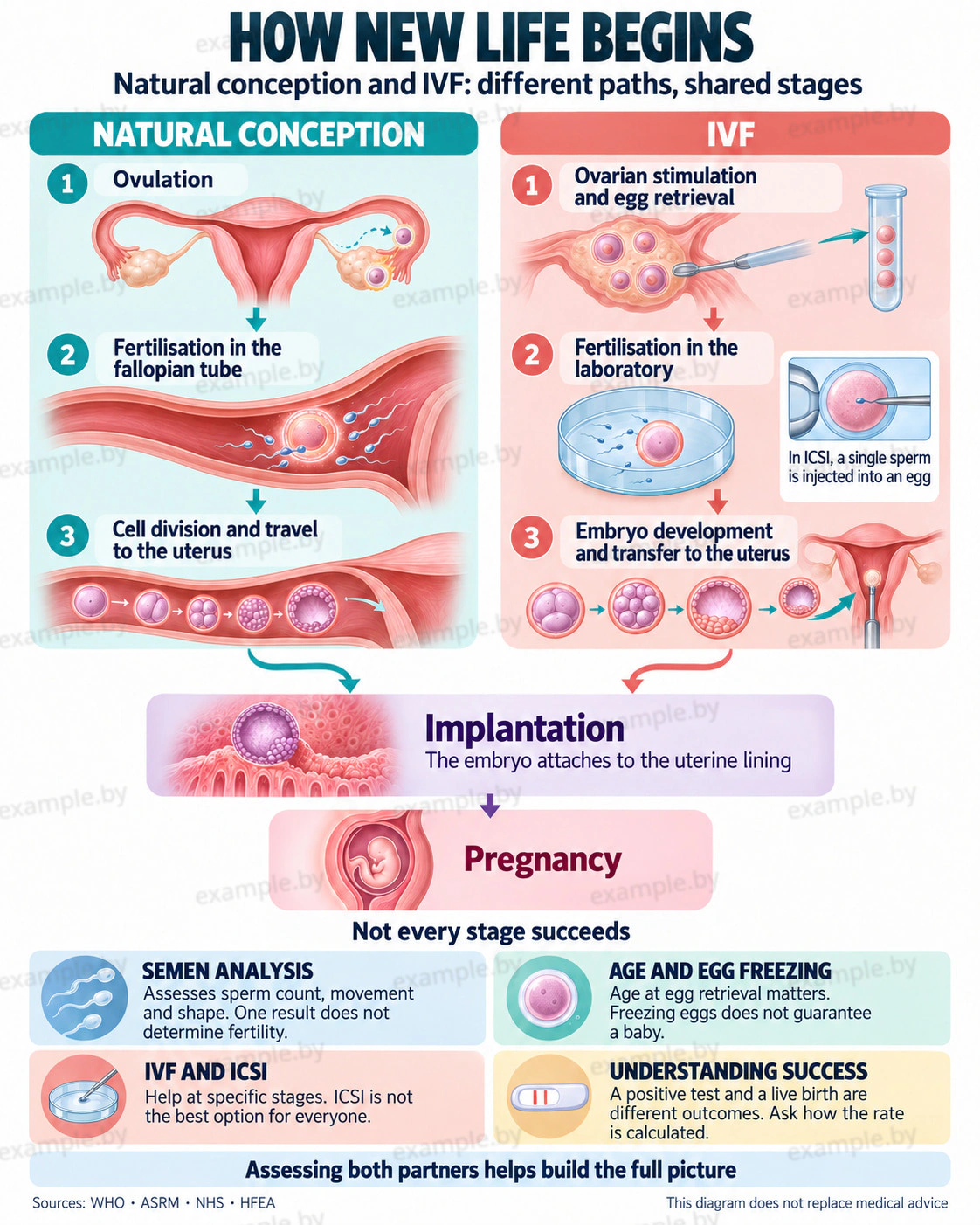
How Life Begins: From Conception to IVF
 Body · 10.10.26
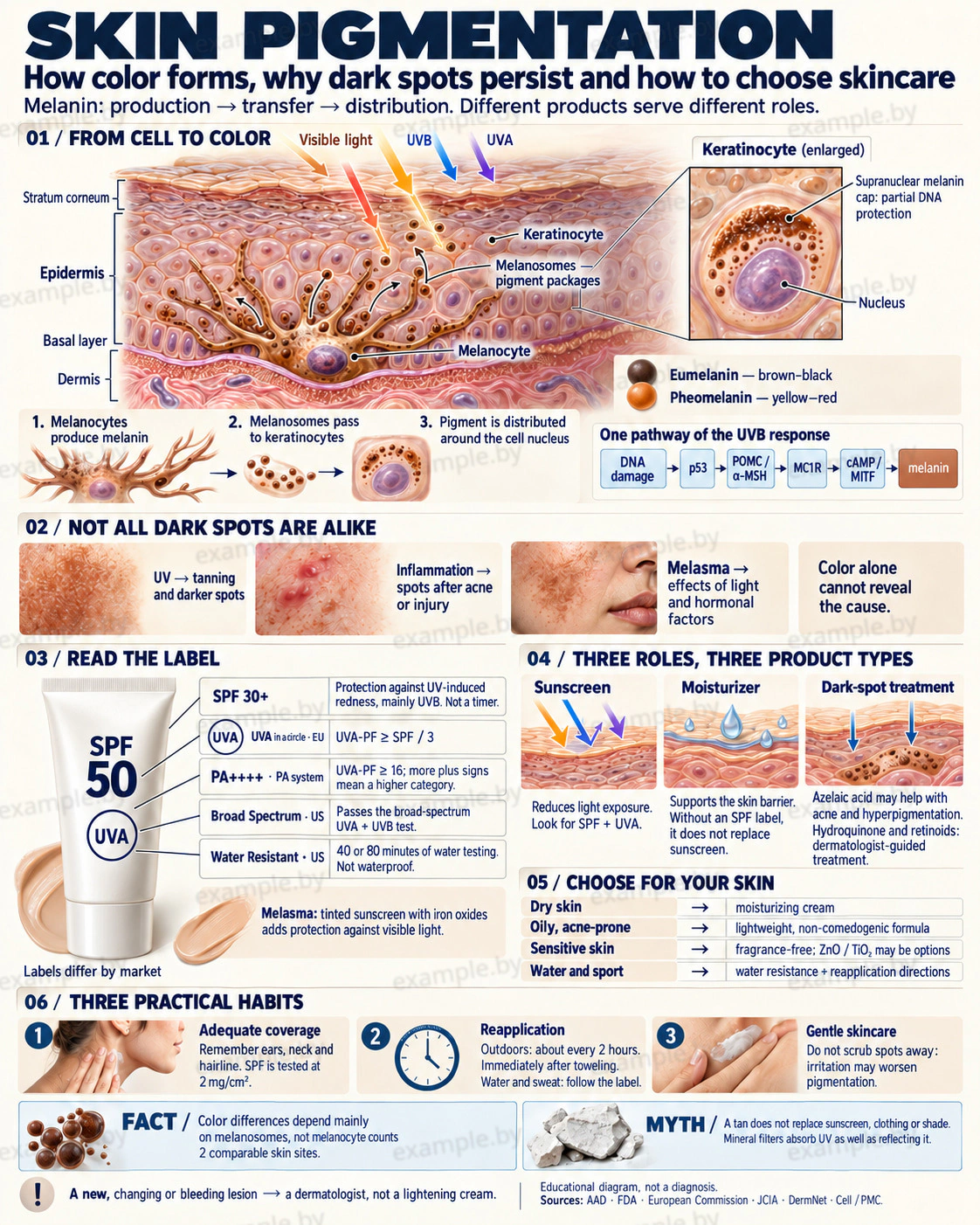
Skin Pigmentation: How Cells Talk to the Sun
 Medicine · 05.10.26
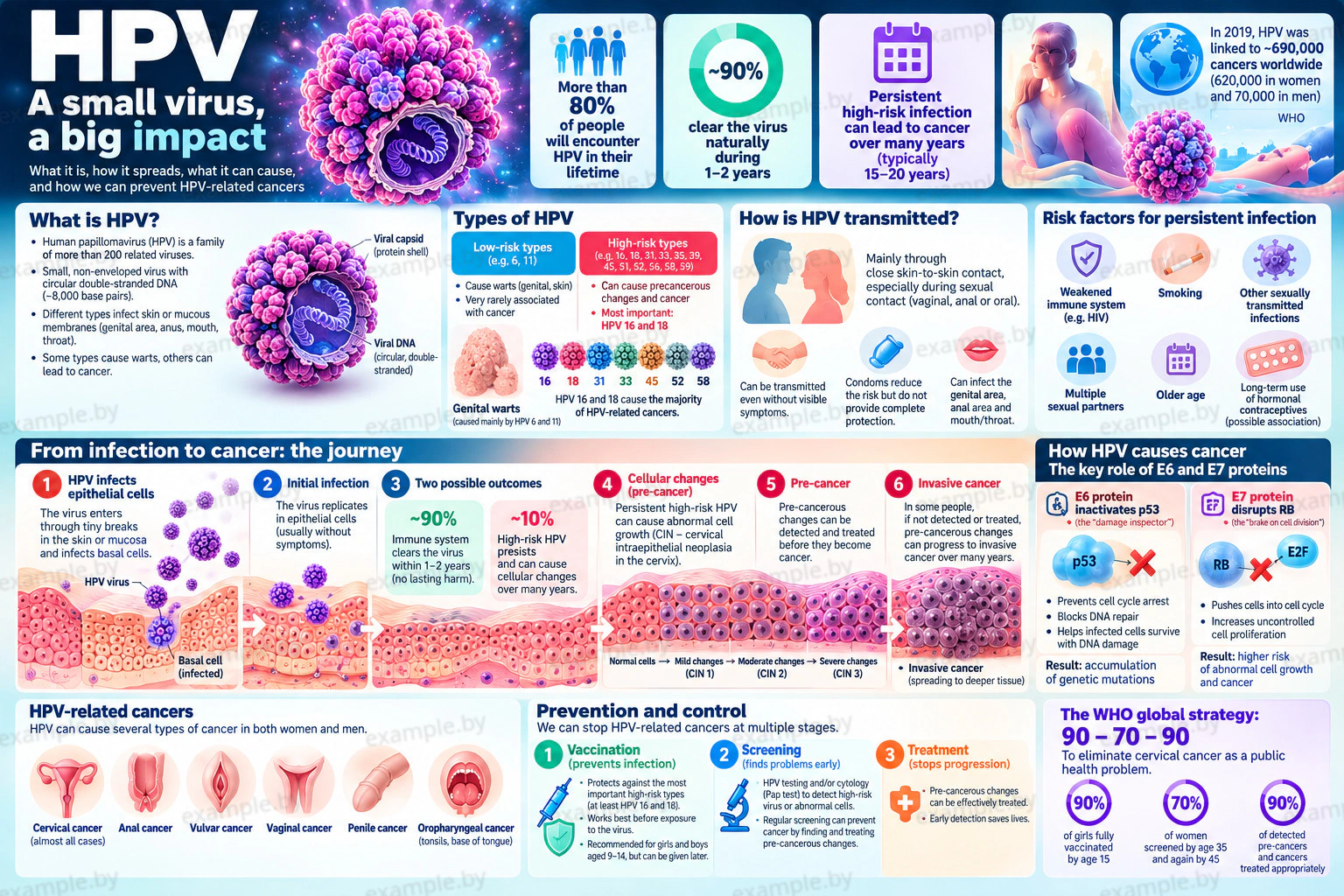
How HPV Can Lead to Cancer Decades Later
 Medicine · 03.10.26
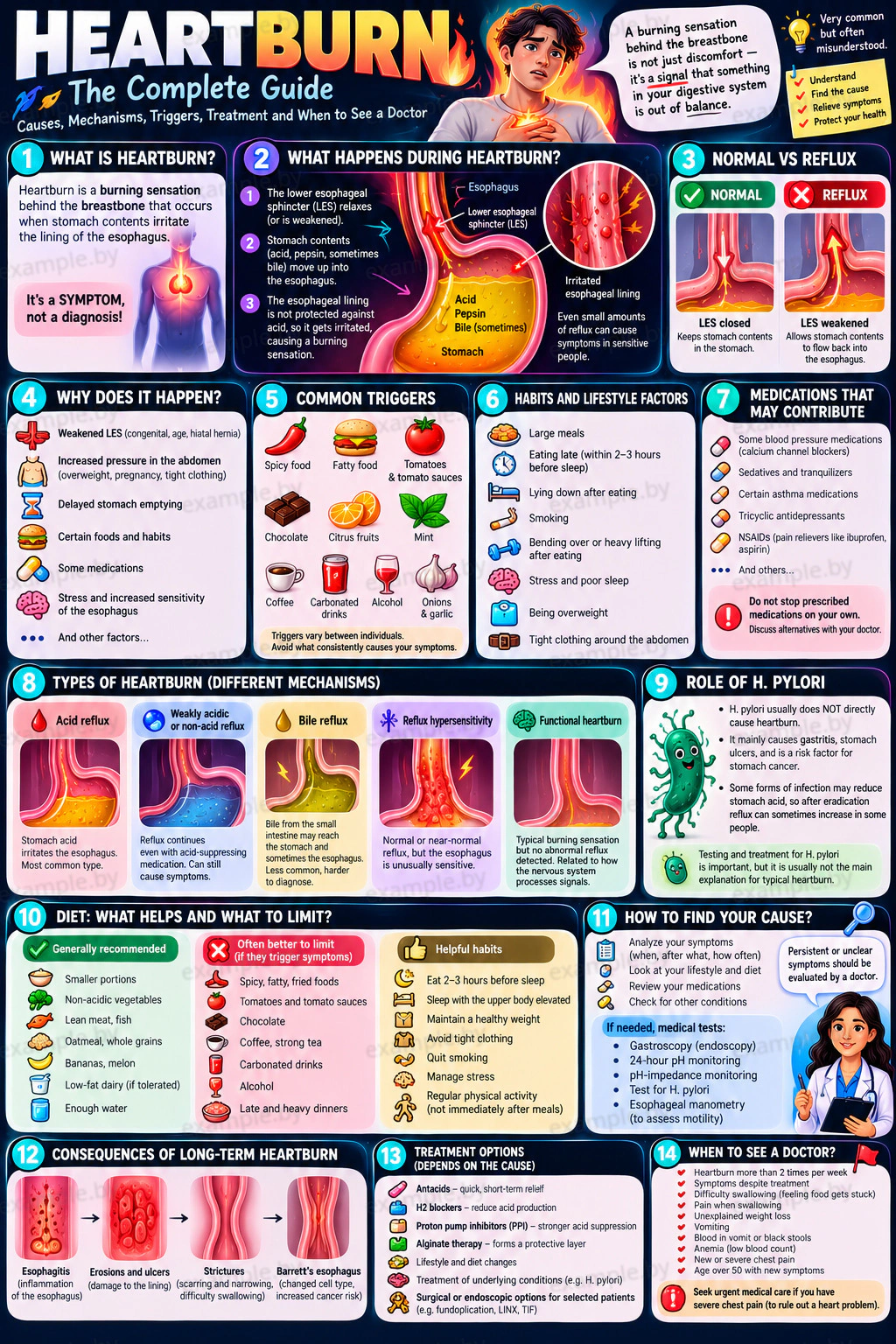
Heartburn: Why Stomach Contents Flow Back Up
 Body · 03.10.26
The Science of Tanning: Why There Is No Safe Tan
 Medicine · 03.10.26
ADHD: Why It Is Not an Attention Deficit
 Medicine · 03.10.26
Sleep: What Really Happens to Us Every Night
 Medicine · 03.10.26
FOMO: Why Everyone Seems to Be Doing Better Than You
 Culture · 27.10.26
Why One Family Can Have Different Surnames
 Biology · 19.10.26
Why Cats Purr and What the Sound Really Means