FOMO: Why Everyone Seems to Be Doing Better Than You
How the digital world forces us to compare our routine with others' triumphs, what notifications do to the brain, and how to redirect focus to your own goals.
- Section
- Medicine
- Date
- Reading
- 15 minutes

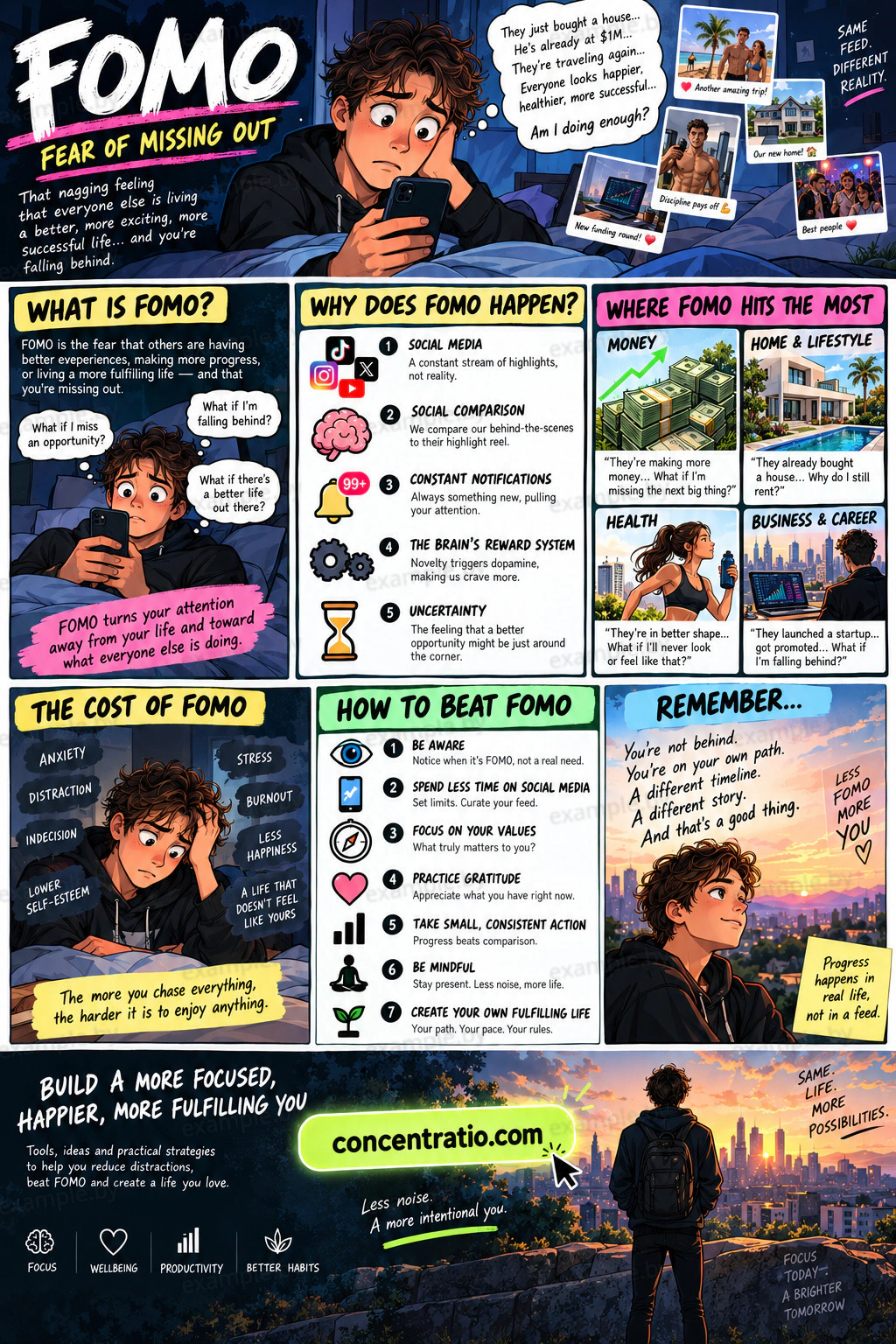
You open your phone for just a minute.
Someone bought a house.
Someone else launched a business.
A third person writes that they made $50,000 in a month.
Someone is traveling through Mexico.
Someone in peak physical shape has already finished a workout by 6 AM.
Someone younger than you is already “financially free.”
You close the app.
Formally, nothing bad has happened.
Yet somehow, a life that felt perfectly fine a few minutes ago now feels as if you are falling behind.
This feeling has a name: FOMO, or the Fear of Missing Out.

And the trouble with FOMO is not so much that we are actually missing out on things.
The trouble is that the modern information landscape allows us to observe, virtually without limits, all the alternate lives we could be living instead of our own.
What FOMO Actually Is
In scientific literature, FOMO is typically defined as a pervasive apprehension that others might be having rewarding experiences from which one is absent.
One of the seminal papers on FOMO appeared in 2013. Researcher Andrew Przybylski and colleagues developed a FOMO scale and found an association between high FOMO and lower life satisfaction, unmet psychological needs, and more intense social media use. (DOI)
An important caveat: FOMO is not a distinct psychiatric diagnosis. It is a psychological phenomenon or construct that varies widely in intensity.
Nearly everyone experiences mild FOMO from time to time.
“Maybe I should have gone with them?”
or:
“What if this opportunity never comes around again?”
The problem begins when this question turns into life’s background hum:
“What if I’m constantly making the wrong choices?”
The Core Paradox of FOMO
Human life is finite.
You have a limited amount of time.
A limited amount of money.
A limited amount of attention.
Physically, you cannot simultaneously:
build a company,
travel extensively,
become an elite athlete,
spend all your time with family,
read hundreds of books,
master every emerging technology,
profit from every booming market,
attend every party,
and watch every great television series.
Yet the internet lets you witness all these alternative lives at once.
Historically, a person compared themselves to a few dozen or a few hundred people around them.
Today, in a single evening, you can see thousands of fragments of other people’s lives.
And the brain commits a fundamental error:
it aggregates the successes of different individuals into a single, imaginary superhuman.
One person displays a beautiful house.
Another, a toned physique.
A third, a thriving company.
A fourth, exotic travels.
A fifth, an enviable relationship.
A sixth, wealth.
And the brain pieces it together something like this:
“Everyone around me is rich, attractive, healthy, traveling, running businesses, and happy. I’m the only one lagging behind.”
In reality, such a person almost never exists.
Why FOMO Has Grown So Powerful Today
The underlying mechanism is far older than social networks.
Humans have always needed to know what is happening in the group. For a social species, missing critical information or facing ostracism from the community could carry a heavy cost.
However, the digital environment has dramatically amplified this mechanism.
The modern loop looks roughly like this:
event → post → comparison → uncertainty → checking the phone → new information → new comparison
And the cycle repeats.
Systematic reviews and meta-analyses consistently reveal a positive link between FOMO, social media engagement, and problematic use of social platforms. One major review synthesized data from over 55,000 participants. At the same time, researchers highlight an important point: the direction of causality cannot always be determined. FOMO may prompt someone to check the internet more frequently, but intensive internet use can also sustain and fuel FOMO. (PubMed Central (PMC))
This creates a feedback loop.
I feel like I’m missing something → I check → I see even more things I’m missing → I check again.
Why Notifications Keep This Loop Running So Well
Here, a 2026 study offers a compelling finding.
Researchers presented participants with social media notifications while they performed a cognitive task.
Following an alert, information processing speed temporarily dropped for approximately seven seconds.
Crucially, the decisive factor was not total screen time, but rather:
how often a person checks their phone,
how many notifications they receive,
and how significant they perceive the notification to be.
The researchers attribute this effect to a combination of three mechanisms: cue salience, conditioned associations, and appraisals of personal relevance. (DOI)
This is why the popular explanation—
“the phone simply gives the brain dopamine”
—is overly simplistic.
The actual mechanism is far more nuanced.
The brain gradually learns:
this sound could signal something vital.
A message.
A like.
Breaking news.
An offer.
A job.
An invitation.
An opportunity.
And so, even before you read the notification, your attention has already shifted.
The Four Modern Faces of FOMO
Today, FOMO has long ceased to be just the fear of missing a party.
It has infiltrated virtually every sphere of life.
💰 Money
You see:
“I made $20,000 this month.”
“Here’s a stock that just skyrocketed.”
“AI will mint new millionaires.”
“Real estate prices are surging again.”
“You need multiple income streams.”
And a feeling takes hold:
“If I don’t act right now, I’ll be left behind forever.”
This is a particularly treacherous form of FOMO because anxiety masquerades as a rational financial decision.
Research into financial FOMO shows that messaging deliberately designed to instill urgency and fear of missing out can indeed alter people’s financial preferences. For instance, a 2024 experimental series demonstrated the impact of FOMO marketing on participants’ decisions regarding crypto assets. (Wiley Online Library)
The crucial question to ask here is:
“Do I genuinely want to do this, or am I just afraid that everyone else will get rich without me?”
These are two fundamentally different motivations.
🏡 Home and Lifestyle
The next layer:
“Everyone has already bought property.”
“Everyone moved to a better neighborhood.”
“Everyone’s apartment looks nicer.”
“They’re constantly traveling.”
“Why am I still renting?”
Here, FOMO merges with social comparison.
What is particularly striking is that people compare entirely mismatched circumstances.
Age.
Family support.
Income.
Inheritance.
Country.
Real estate market conditions.
Debt loads.
Risk tolerance.
Yet on social media, all context evaporates.
Only the photo remains:
“We bought our dream home!”
The brain registers the outcome.
It does not see the underlying system that produced it.
❤️ Health
Here, FOMO adopts a different guise.
Not:
“I want to be healthier.”
Rather:
“I am not doing enough.”
One person runs marathons.
Another hits the gym five days a week.
A third tracks macronutrients.
A fourth wakes up at 5 AM.
A fifth promotes the latest wellness regimen.
Viewed all at once, it is easy to assume that a well-adjusted person ought to be doing all of these simultaneously.
The focus shifts from:
“What actually benefits me?”
to:
“What is everyone else doing?”
Even self-care morphs into yet another race.
💼 Career and Business
In professional life, FOMO is especially virulent today.
AI.
Startups.
New programming languages.
New tools.
New business models.
New professions.
Every week, something appears that the internet declares:
“This will change everything.”
The inevitable conclusion:
“I must learn this immediately.”
Then comes the next technology.
And the next.
And the next.
A paradox emerges.
People become so terrified of missing out on emerging opportunities that they continually pivot, never sticking with any single pursuit long enough to gain traction.
In the end, the FOMO of possibilities actively prevents you from capitalizing on the real opportunity right in front of you.
A recent 2026 study on workplace FOMO similarly links social media-induced FOMO to workplace interruptions, coworker relationships, and burnout. (ScienceDirect)
How FOMO Takes Shape
Consider a simple scenario.
You are working on your project.
Everything is going well.
Then you open LinkedIn.
Someone announces:
“After 18 months of building, we just raised $5M.”
And a cascade begins.
1. Comparison
“They’ve already raised funding.”
2. Comparison turns into self-judgment
“And I haven’t.”
3. An alternate reality emerges
“Maybe I should be building that kind of business instead.”
4. Uncertainty sets in
“What if my project is fundamentally flawed?”
5. The urge to resolve uncertainty takes over
You keep scrolling and reading.
6. Even more alternatives appear
AI startup.
SaaS.
Real estate.
YouTube.
Amazon.
Remote job.
Trading.
Creator economy.
7. Certainty drops instead of rising
And the brain searches for answers once again.
Just one more scroll.
This is why information overload does not necessarily resolve uncertainty.
Often, it magnifies it.
Why Other People’s Lives Almost Always Seem More Efficient
Social networks do not broadcast a life.
They broadcast milestones.
A person might live through 365 completely ordinary days.
Yet they post:
a promotion,
a vacation,
a new car,
a marathon finish,
a wedding,
a company launch.
If you see only these six moments, it looks like a fantastically successful year.
The remaining 359 days simply vanish.
As a result, you are comparing:
your continuous, unedited life
to
a highlight reel of someone else’s.
Informationally, it is an inherently rigged comparison.
FOMO Can Masquerade as Ambition
This is perhaps the most intriguing aspect.
Not every desire for growth stems from FOMO.
A person might want to earn more.
Buy a home.
Start a business.
Get healthier.
Learn a new technology.
There is nothing wrong with any of that.
The difference typically lies in the origin of the impulse.
Healthy ambition says:
“I want to reach that point.”
FOMO says:
“I need to reach that point immediately, because everyone else is already there.”
The former creates direction.
The latter creates pressure.
You can test yourself with a very simple thought experiment:
If no one would ever see this achievement, would I still want to pursue it?
If the answer is yes, the goal likely holds intrinsic value for you.
If your desire abruptly evaporates, a significant part of your motivation may be driven purely by comparison.
The Costliest Resource FOMO Consumes
One might assume that FOMO primarily drains our mood.
Yet another resource is far more critical.
Attention.
Every new opportunity competes with your current goal.
Every notification competes with your current thought.
Every external success temporarily prompts you to second-guess your own path.
The modern information economy essentially offers an infinite menu of possible directions.
Yet meaningful achievement almost always demands the exact opposite:
sticking to one direction long enough.
This creates one of the defining tensions of modern life:
The world constantly pitches new alternatives, while most serious accomplishments require the ability to ignore almost all of them.
Can FOMO Ever Be Useful?
Yes.
FOMO is not inherently an enemy.
At times, it acts as a signal.
For instance:
“I genuinely miss social connection.”
“I’ve wanted to travel for a long time.”
“I don’t like my current job.”
“I want to pay more attention to my health.”
In those moments, envy or FOMO can highlight where your dissatisfaction lies.
Instead of suppressing it reflexively, it helps to ask:
“What specific element of this person’s life struck a chord?”
Not the person as a whole.
Not the entire polished picture.
A specific component.
Freedom?
Wealth?
Community?
Recognition?
Creativity?
Health?
Once the root cause becomes clear, FOMO shifts from vague anxiety into actionable information.
What Actually Helps Mitigate FOMO
Eliminating FOMO entirely is neither feasible nor necessary.
The goal is rather to break the automatic reflex between the feeling:
“I’m missing out”
and the reaction:
“I must immediately check, change, or buy something.”
Research points to several practical approaches.
Reduce the volume of triggers rather than attempting total abstinence from social media. In a randomized trial involving 220 young adults, restricting social media use to roughly an hour a day for three weeks yielded significantly greater reductions in FOMO, anxiety, and depressive symptoms, alongside sleep improvements, compared to a control group. An earlier study with 143 students likewise found positive effects from limiting access to multiple social platforms. (DOI)
Pay close attention to check frequency. A 2026 study suggests that the frequency of phone checks and incoming notifications may matter more than gross screen time alone. Spending two continuous hours on a phone is fundamentally different for the brain than fragmenting that time into a hundred micro-distractions. (DOI)
Establish internal metrics of progress. If you lack your own benchmarks, your feed will supply them for you. Under its guidance, success means running a venture today, owning real estate tomorrow, sculpting muscle the day after, followed by travel, and then launching an AI project. An internal framework of goals shields your attention from ever-shifting external cues.
Separate information from execution. Discovering a new opportunity does not oblige you to act on it immediately. Creating space between “that’s interesting” and “I’m doing this” is essential—particularly when offers rely on artificial urgency: “last chance,” “everyone’s already doing it,” “before it’s too late.” Research on marketing FOMO demonstrates that these tactics are deliberately leveraged to drive consumer engagement and sway purchasing decisions. (Wiley Online Library)
Cultivate mindfulness over compulsive control. In a 2026 experiment, participants spent two weeks either reducing social media use by 30 minutes a day, practicing mindfulness exercises, or combining both approaches. FOMO dropped across all intervention groups, with the combination of social media restriction and mindfulness showing especially strong sustained outcomes across several metrics. (DOI)
Treat gratitude as attentional recalibration rather than mere positive thinking. FOMO relentlessly forces the brain to inventory what is missing. Asking “what is already working in my life?” redirects cognitive evaluation toward evidence that the comparing brain systematically ignores.
Learn to miss out intentionally. You cannot commit to one path without temporarily shelving dozens of others. True focus demands the willingness to say: “Yes, something fascinating might be happening over there. But right now, I choose this.”
From FOMO to JOMO
FOMO has gained a compelling antonym:
JOMO, the Joy of Missing Out.
The relief of knowing you do not have to be part of everything.
You don’t have to watch everything.
You don’t have to know everything.
You don’t have to seize every passing opportunity.
You don’t have to move at anyone else’s pace.
JOMO does not mean:
“I need nothing.”
Rather:
“I don’t need everything.”
The distinction is profound.
A Simple Example
Picture two people.
Both want to build a business.
The first watches new videos every week:
“Top 10 businesses to start in 2026.”
Then:
“AI agents are the future.”
Then:
“SaaS is dead.”
Then:
“Creators will become the new startups.”
Then:
“Everyone should build an AI wrapper.”
Six months later, they have:
17 ideas,
9 domains,
4 abandoned projects,
and not a single product developed with sufficient consistency.
The second person sees the exact same opportunities.
Yet they say:
“Interesting. I’ll bookmark that. Right now, I have one hypothesis that I’m testing over the next three months.”
By the end of that period, their idea might even prove wrong.
Yet they gained something the first person never did:
real information forged through real action.
FOMO keeps you endlessly searching for the best path.
Focus allows you to find out whether the path you chose actually works.
The Core Takeaway
Perhaps the most toxic premise of FOMO is this:
somewhere, an ideal version of my life exists, and I am perpetually making the wrong choice.
Yet every choice inherently involves forgoing other possibilities.
If you are building a business, you are not spending the entire year traveling.
If you travel extensively, your career growth may take longer.
If you spend an evening with your family, you miss other events.
If you dive deeply into one technology, dozens of others will pass you by.
This is not a flaw in the system.
This is what choosing means.
You cannot live every plausible iteration of your life.
You can only select one and gradually make it your own.
The True Antidote to FOMO: Focus
That antidote is focus.
The capacity to see a hundred possible roads
and still keep walking along one.
The capacity to look at someone else’s triumph and say:
“Good for them. But that doesn’t have to be my route.”
The capacity to learn of a new opportunity without treating its mere existence as a mandate to upend your life.
And the capacity to occasionally close your feed and realize something simple:
while you are watching other people live their lives,
your own is unfolding right now.
Liked it? Save it for later.
 Medicine · 05.10.26
How Helicobacter pylori Survives Stomach Acid
 Medicine · 03.10.26
What DNA Tests Can Actually Reveal
 Medicine · 11.10.26
Why Gums Bleed and Where the Real Danger Begins
 Medicine · 11.10.26
How Life Begins: From Conception to IVF
 Body · 10.10.26
Skin Pigmentation: How Cells Talk to the Sun
 Medicine · 05.10.26
How HPV Can Lead to Cancer Decades Later
 Medicine · 03.10.26
Heartburn: Why Stomach Contents Flow Back Up
 Body · 03.10.26
The Science of Tanning: Why There Is No Safe Tan
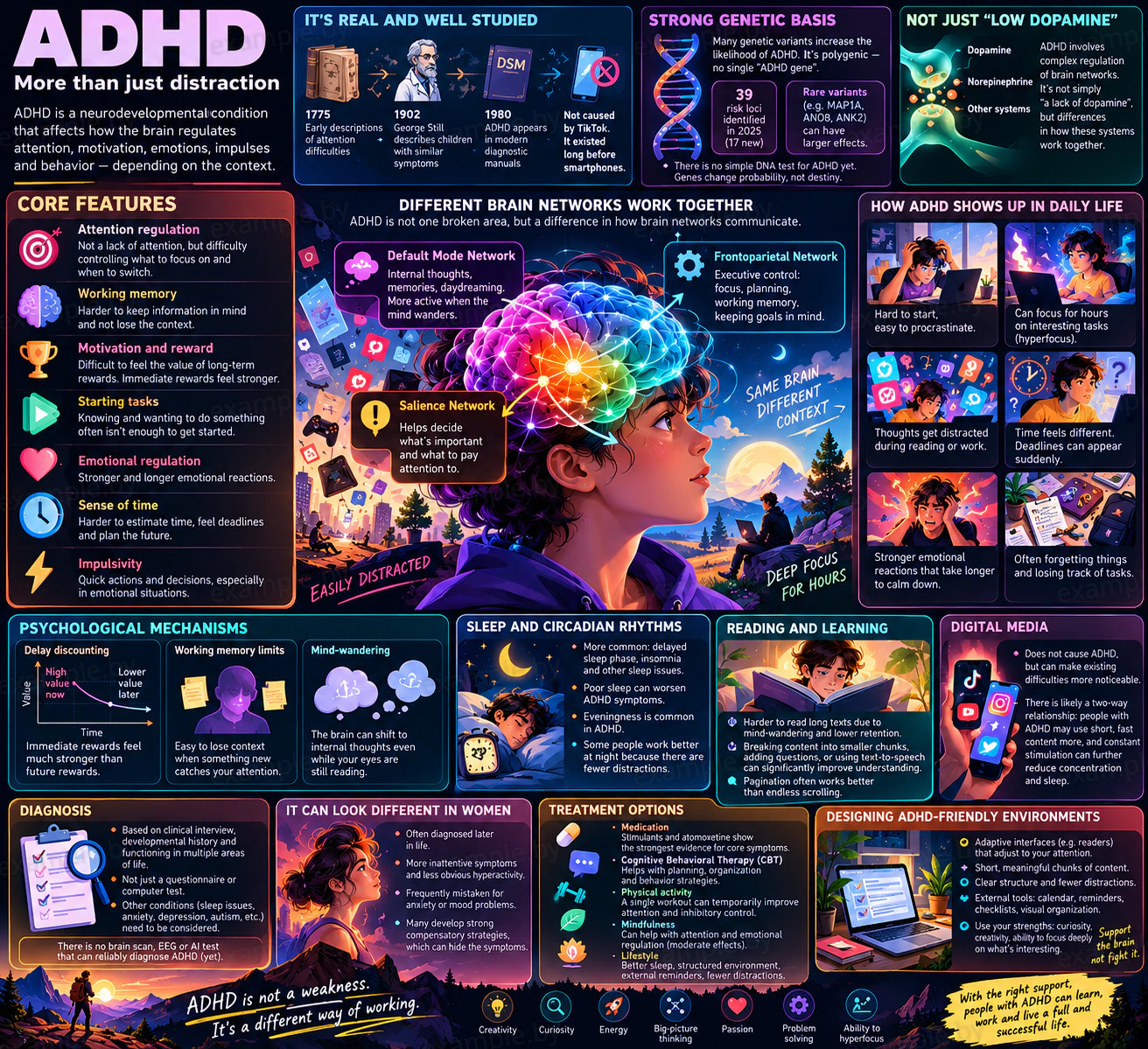 Medicine · 03.10.26
ADHD: Why It Is Not an Attention Deficit
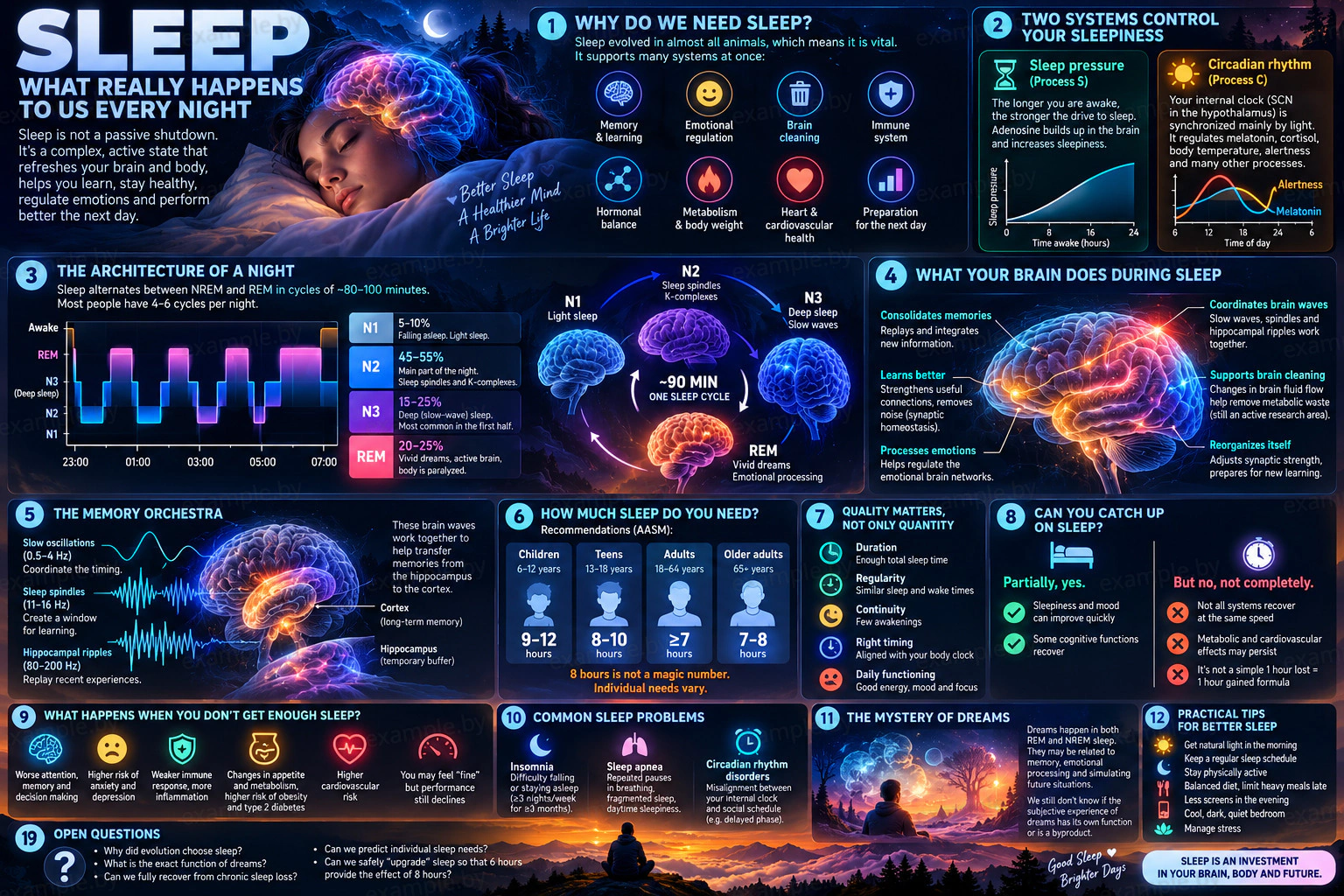 Medicine · 03.10.26
Sleep: What Really Happens to Us Every Night
 Culture · 27.10.26
Why One Family Can Have Different Surnames
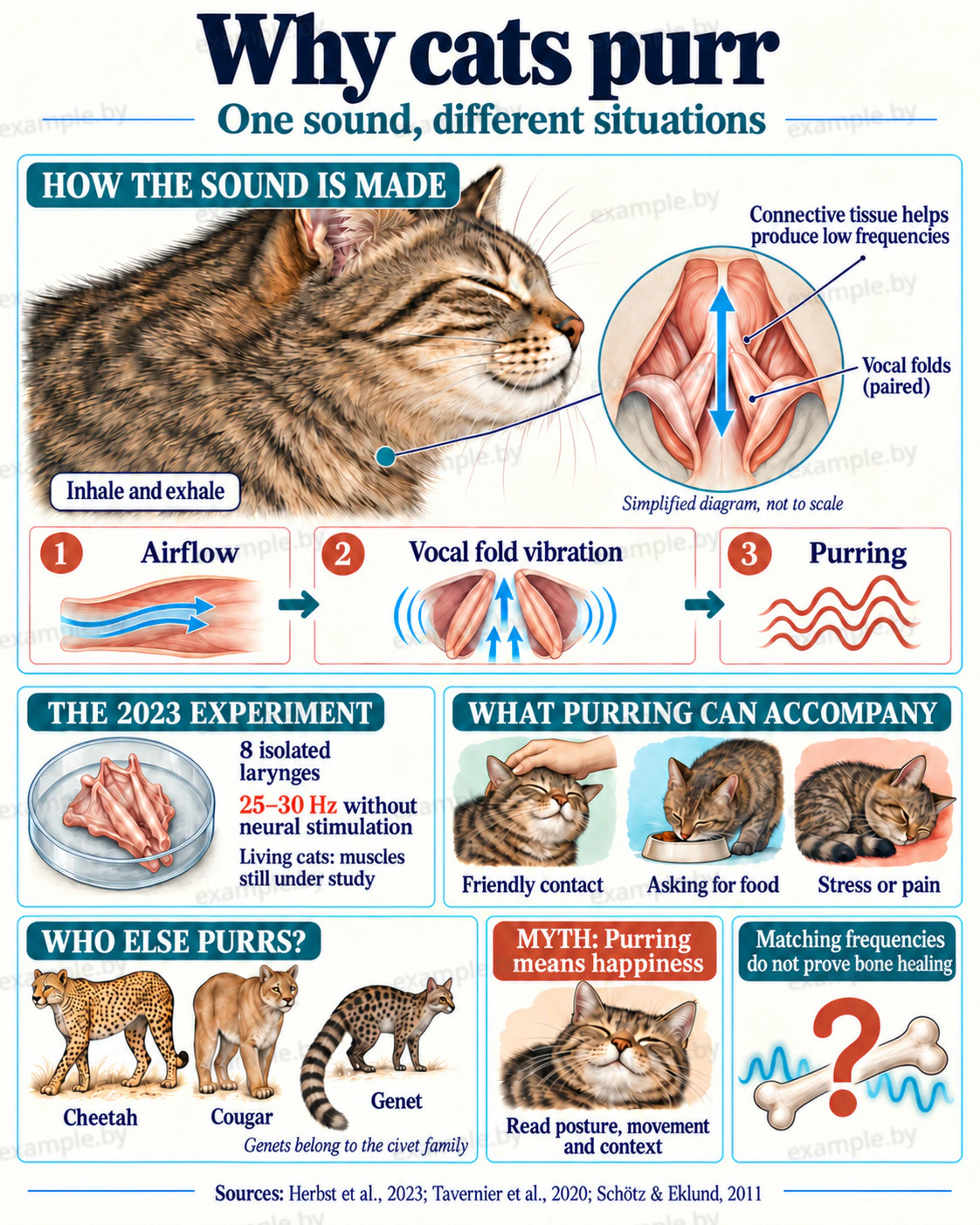 Biology · 19.10.26
Why Cats Purr and What the Sound Really Means