Who Pays for Heat: Why a Lizard Can Be Hotter Than a Bird
Why the split into cold-blooded and warm-blooded animals is outdated, where animals get their heat, and how lizards, hummingbirds and fish actually manage their body temperature.
- Section
- Body
- Date
- Reading
- 15 minutes
- Source
- OpenStax Biology 2e
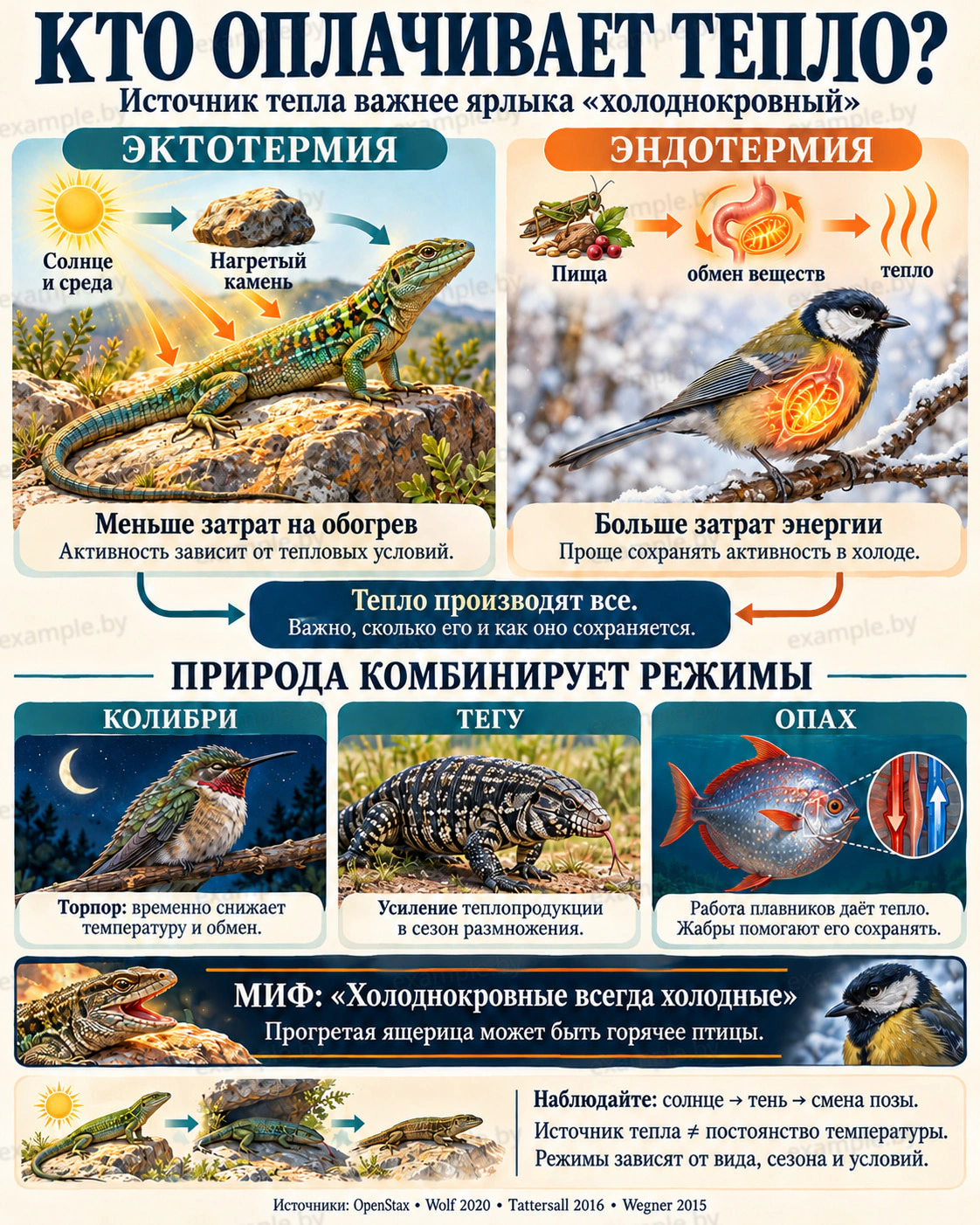
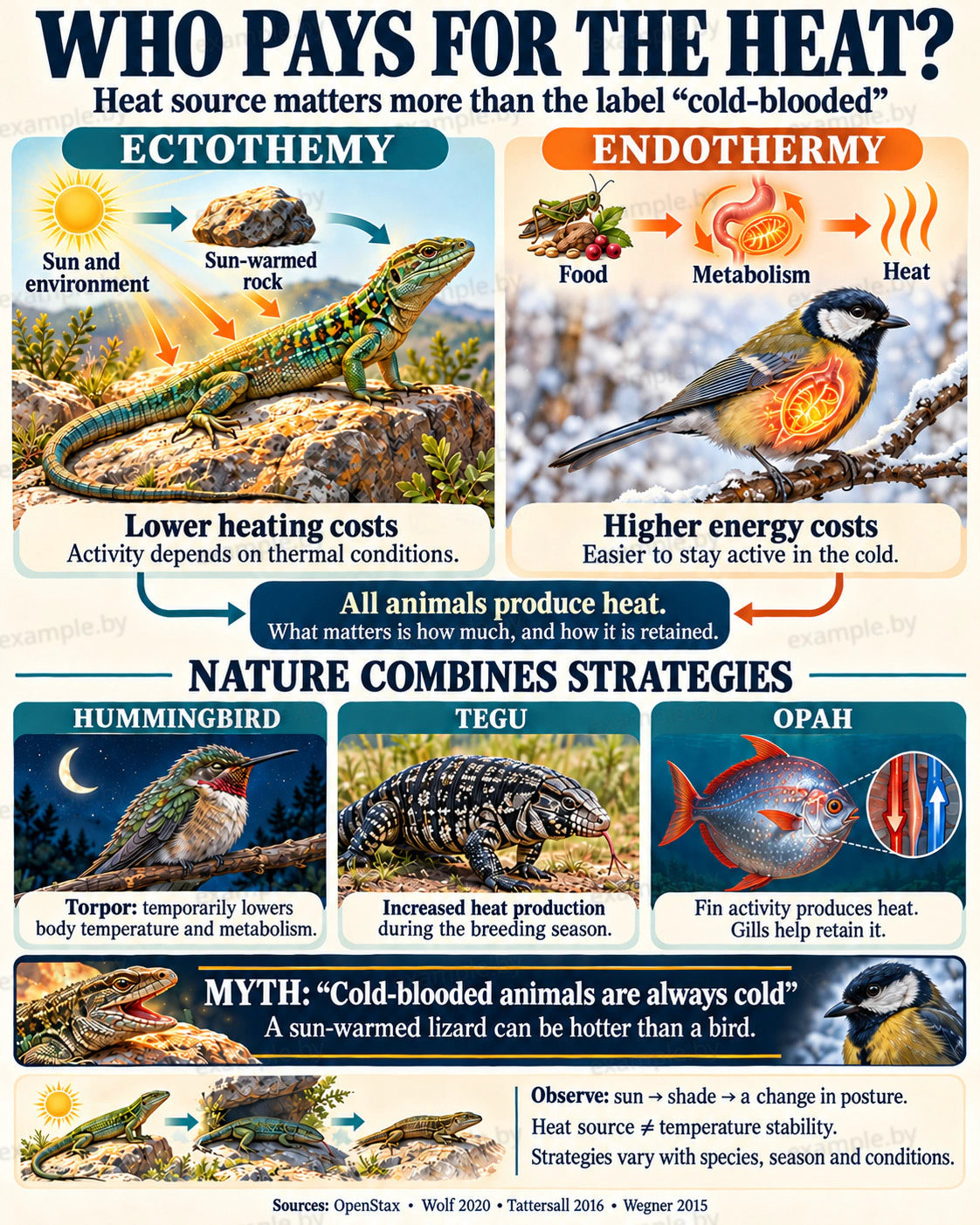
In 2020, researchers described a hummingbird whose body temperature fell to 3.26 °C at night. The bird did not stop being a bird, and its physiology did not turn into that of a lizard. This was torpor, a state of deeply reduced metabolism and body temperature. The observation applies to a single individual of the species Metallura phoebe in a study of high-altitude hummingbirds, not to the usual nighttime temperature of all birds. But even that is enough to cast doubt on the school formula "warm-blooded animals are always warm." Wolf et al., 2020
The main difference lies in where an animal gets most of the heat it uses to maintain its temperature. Some rely mostly on the environment, others on their own metabolism. Both strategies require managing heat, and both have a cost. Evolution has kept different solutions because which one pays off depends on food, body size, climate and way of life.
Two questions instead of one label
Ectothermy means that body temperature depends mainly on external heat; endothermy means substantial reliance on metabolic heat production. That is why a lizard warmed by the sun can be hotter than a bird and still remain an ectotherm. Ectothermic animals also release heat from metabolism: the question is how much, and what role it plays.
Another trait is how constant the temperature is. Homeothermy means relative stability; heterothermy means that temperature changes over time or between parts of the body. The source of heat and the constancy of temperature should not be confused: an inhabitant of a stable aquatic environment can have an almost constant temperature without powerful internal heating. OpenStax, thermoregulation
It helps to picture an animal's profile card with two lines: "where does the heat come from?" and "when and where does the temperature change?" Such a card tells you more than the single word "cold-blooded." It is a way of describing animals, not a new classification of species.
A body, not a thermos: heat is always moving
Temperature reflects the balance between heat gained, produced and lost. Heat is transferred through contact with a surface, the movement of air or water, radiation and evaporation. The direction of exchange depends on conditions: a hot rock warms the animal, a cold one draws heat away. Evaporation of water from a surface cools; fluid that is secreted but does not evaporate does not have the same effect. OpenStax, energy and heat balance
As a thought experiment, place two identical vessels of warm water side by side and wrap one of them. Both start at the same temperature but cool at different rates. Insulation changes the rate of loss without creating energy. A living body is more complicated: it also produces heat, alters blood flow and moves around.
This raises an important question about any photograph of a "hot animal": has it just warmed up, is it actively producing heat, or is it slowly losing it? A single temperature snapshot cannot tell these explanations apart. A conclusion requires a process observed over time and information about conditions.
Where internal heating comes from
Metabolism involves converting the energy of nutrients, and part of that energy dissipates as heat. Muscle contractions can increase heat production: shivering is a clear example of work without noticeable movement of the body. Many placental mammals have specialized brown adipose tissue. The protein UCP1 allows the energy of cellular respiration to be directed into heat, reducing how much of it is stored as ATP, the cell's main energy carrier.
But brown adipose tissue is not a universal device of all endotherms. Birds do not have it; their heat production is closely tied to muscles. A review of the mechanisms shows many combinations of organs, tissues and molecular processes. Legendre and Davesne, 2020
Here blood, above all, distributes heat. It would be a mistake to picture "warm blood" as a special substance with its own heater. The analogy with a heating system helps only partly: biological tissues work, produce heat and alter its transfer all at once, so the boiler and the pipes cannot be strictly assigned to separate organs.
How humans warm up
Humans have no separate "heater": heat arises in almost all cells as food is burned. In mitochondria (the cell's "power plants"), glucose and fats are oxidized with the help of oxygen. Part of the energy is stored in ATP, and the rest goes straight into heat. But the energy of ATP is also spent on the work of cells: pumping ions, synthesizing proteins, contracting muscles. In the end, almost all of it is dissipated as heat too. That is why the body is always generating heat, even during sleep.
At rest, most heat comes from the internal organs: the liver, heart, kidneys, brain and skeletal muscles. The brain, which accounts for about 2% of body mass, uses roughly a fifth of resting energy [check: organ shares of resting heat production and source]. During exertion, muscles become the main source: their contribution rises sharply, which is why you feel hot after running.
There is also a built-in "inefficiency." The mitochondrial membrane lets some protons leak past the enzyme that makes ATP, and the energy of this flow turns into heat without producing ATP. This constant leak accounts for a noticeable part of basal metabolism. Blood carries heat from the organs and muscles throughout the body.
In the cold, additional mechanisms switch on. The first is shivering: rapid, small muscle contractions, almost all of whose energy goes into heat. The second is brown adipose tissue. It is especially abundant in newborns, who shiver poorly. In adults, small patches of brown fat have been found in the neck region and above the collarbones; how much they contribute to overall heating remains a matter of debate [check: estimate of brown fat's contribution in adults and source].
The whole system is controlled by the hypothalamus, a part of the brain that receives signals from temperature sensors in the skin and inside the body and compares them with a "set" temperature of about 37 °C (over the course of a day it varies by roughly one degree). In the cold, skin vessels narrow to lose less heat, and shivering and brown fat switch on. In the heat, vessels widen and sweating begins. The overall level of metabolism is also set by thyroid hormones. OpenStax, energy and heat balance
Is this different from other warm-blooded animals? The basis is the same: mitochondria, muscles, blood flow. What differs is the set of tools:
- in many small mammals, especially those that hibernate, brown fat is the main "heater," whereas in an adult human it is more of a supplement;
- birds have no brown fat, and their heat is closely tied to muscle work;
- humans are almost hairless, so clothing, shelter and fire have taken over the role of insulation: heat is also "paid for" with behavior;
- for cooling, humans use sweating over the entire skin, whereas many other animals cool in other ways, for example by panting with an open mouth.
A human, then, is not a special form of endothermy but one variant of a mammal. This is a description of general physiology, not the result of a single study: behind the exact shares of each contribution are estimates that depend on the method and conditions of measurement.
A lizard also manages its temperature
An ectotherm is not obliged to follow the thermometer passively. The choice of sun or shade, of posture and of activity time changes heat exchange. Physiology takes part too: changes in blood flow allow heat to be moved in different ways between the surface and the depth of the body. Over a longer period, acclimation is possible, a restructuring of functions to suit temperature conditions, rather than instant adaptation to everything. Seebacher, 2009
An experiment with juvenile saltwater crocodiles is especially telling. In a 2007 study, researchers acted on the temperature-sensitive channels TRPV1 and TRPM8. After pharmacological blocking, the usual alternation of warming and cooling was disrupted. The behavioral part involved 14 animals, arranged in seven treatment-control pairs. This is evidence that temperature sensors take part in controlling behavior, not proof that all animals are built on a single plan. Seebacher and Murray, 2007
Sitting on a rock can therefore be part of active regulation. The difference from a bird lies in the tools and energy capacity, not in whether control exists at all.
What independence from the weather costs
It is tempting to say, "a mammal needs ten times more food." But without conditions, this is an unreliable comparison. Expenditure depends on mass, temperature, body composition, movement and the animal's state. The basal metabolism of an endotherm is measured under standardized resting conditions; daily costs include much more. One cannot compare expenditure per kilogram with total expenditure, or rest with activity. McNab, 2019
It is therefore more accurate to speak of a trade-off. High heat production requires an energy supply, but it sustains performance when the outside temperature is less than ideal. Saving on internal heating cuts the corresponding costs but makes access to suitable thermal conditions especially important.
Imagine two hypothetical hunting schedules. The first allows going out on a cool morning; the second requires warming up first. Extending working hours is worthwhile if the extra prey covers the costs. If food is scarce, the expensive regime may lose out to the economical one. This is a thought model of the choice between costs and opportunities, not a measurement of specific species: no universal winner follows from it.
Why a small body struggles to hold on to heat
As similarly shaped bodies get smaller, their surface area grows relative to their volume. Heat exchange takes place through the surface, while volume is related to the amount of tissue. Small endotherms therefore usually bear higher costs per unit of mass than large ones. The absolute expenditure of a large animal may nevertheless remain much higher. OpenStax, size and energetics
For a geometric example, shrink a cube by half along each side. Its surface area falls by a factor of four and its volume by a factor of eight; there is twice as much surface per unit of volume. This is an exact property of cubes, but only a first approximation for animals: shape, body coverings and blood supply change the result.
For the same reason, the phrase "a large body stays warm longer" cannot automatically be translated as "it is endothermic." Retaining accumulated heat and producing it intensively are different mechanisms. The mistake resembles trying to judge a heater's power from the single fact that a vessel is still warm.
Three cases that break the simple table
Hummingbirds: temporarily cutting the heating bill
A 2020 study observed 26 hummingbirds of six species at an altitude of about 3,800 meters in the Andes. The birds were kept captive overnight under the natural course of air temperature. All the species studied showed pronounced torpor, and a minimum of 3.26 °C was recorded in one Metallura phoebe. The depth and duration of the state varied between species.
This is an example of the flexibility of a thermal strategy: an animal capable of maintaining a high temperature temporarily lowers its costs. It does not follow that it is generally safe for birds to cool to near zero, nor can such a regime be transferred to humans. Wolf et al., 2020
Tegus: seasonal boosting of heat production
In a 2016 study, Argentine black and white tegus during the reproductive season were observed to have body temperatures up to 10 °C above their surroundings at night. The authors attributed the result to a combination of increased metabolism and reduced heat loss. Burrows and behavior helped retain heat; testing under controlled conditions made it possible to separate the effect from simple daytime warming.
The result applies to a particular species and season. It does not mean that any lizard can keep itself warm all the time like a mammal. The tegu shows that an intermediate regime is possible, not that it is a living copy of the ancestor of all endotherms. Tattersall et al., 2016
Opah: keeping heat where it is usually lost
In 2015, a form of whole-body endothermy was described in the opah, a fish. The constant work of the pectoral fins generates heat, while countercurrent heat exchangers in the gills reduce its loss. Vessels with flows in opposite directions run close together, allowing heat to be transferred within the system. Warmed blood reaches, among other organs, the heart.
Here production and conservation combine: intense movement alone would not be enough if the heat immediately escaped into the water. The expression "whole-body endothermy" does not mean a constant temperature at the human level. Wegner et al., 2015
Why evolution did not choose a single solution
The origin of endothermy is explained by several models. One links it to selection for sustained activity and high aerobic capacity, the ability to power work with the help of oxygen. Another stresses reproduction and parental care, including the temperature conditions of development. Changes in the energy supply of tissues are also discussed. These are competing and partly compatible explanations, not an established single sequence of events. Little and Seebacher, 2014
A strong objection to the simple story goes like this: the advantage of a modern trait does not prove that the trait originally arose for that very reason. The ability to stay active longer could have been a cause, a consequence or part of mutually reinforcing changes. And the modern tegu shows a physiological possibility but does not record the history of the distant past.
The conclusion "endothermy is more complex, therefore evolutionarily better" is therefore meaningless without conditions. It is more useful to ask which costs pay off in a given environment and which constraints cannot be circumvented by behavior.
How to see this for yourself, without interfering
You can keep a short observation diary of lizards from a distance: time, sun or shade, surface, posture, movement. Repeating the observations at different hours helps you notice that the animal uses several microenvironments. This is a practical application of the principle of behavioral thermoregulation; it is useful for formulating questions but does not measure the temperature of internal organs.
The caveat is essential: moving into the shade may also be related to shelter, food or alarm. Record the observation separately from the explanation: "moved under a rock," then "possible reason: change in thermal conditions." Do not catch the animal or deprive it of the chance to leave in order to test a hypothesis.
When reading the next news story about a "warm-blooded fish," use three questions: where was the temperature measured, what was it compared with, and what mechanism was used to explain the result. That way surprise turns into understanding, and an exception does not become a new myth.
A lizard and a hummingbird solve the same physical problem by different means. One more often chooses a place where heat can be obtained; the other can pay for it with its own metabolism and sometimes temporarily cut its expenses. The real story here is the diversity of ways to reconcile temperature, available energy and life in a changing environment.
Sources and their role
- OpenStax, Biology 2e, 33.3, basic definitions and the distinction between the source of heat and the stability of temperature.
- OpenStax, Anatomy and Physiology 2e, 24.6, physical pathways of heat exchange.
- Legendre, Davesne, 2020, a review of the diversity of mechanisms, including the limits of the familiar categories.
- Seebacher, 2009, behavior, blood flow and acclimation.
- Seebacher, Murray, 2007, primary experiment on temperature sensors in crocodiles.
- McNab, 2019, basal metabolism, body mass and composition.
- OpenStax, Biology 2e, 33.1, the surface-to-volume ratio and the energetics of size.
- Wolf et al., 2020, primary study of high-altitude hummingbirds; based on the verified author abstract, with no claim of having read the full text.
- Tattersall et al., 2016, seasonal endothermy in tegus; full text checked.
- Wegner et al., 2015, primary description of the opah mechanism; based on the author abstract.
- Little and Seebacher, 2014, comparison of hypotheses on the origin of endothermy; the authors' specific model is not presented as a consensus.
Liked it? Save it for later.
 Body · 18.10.26
The Art of the Pause: How to Speak Calmly and Confidently
 Technology · 13.10.26
How Smart Scales Track Muscle and Water
 Body · 13.10.26
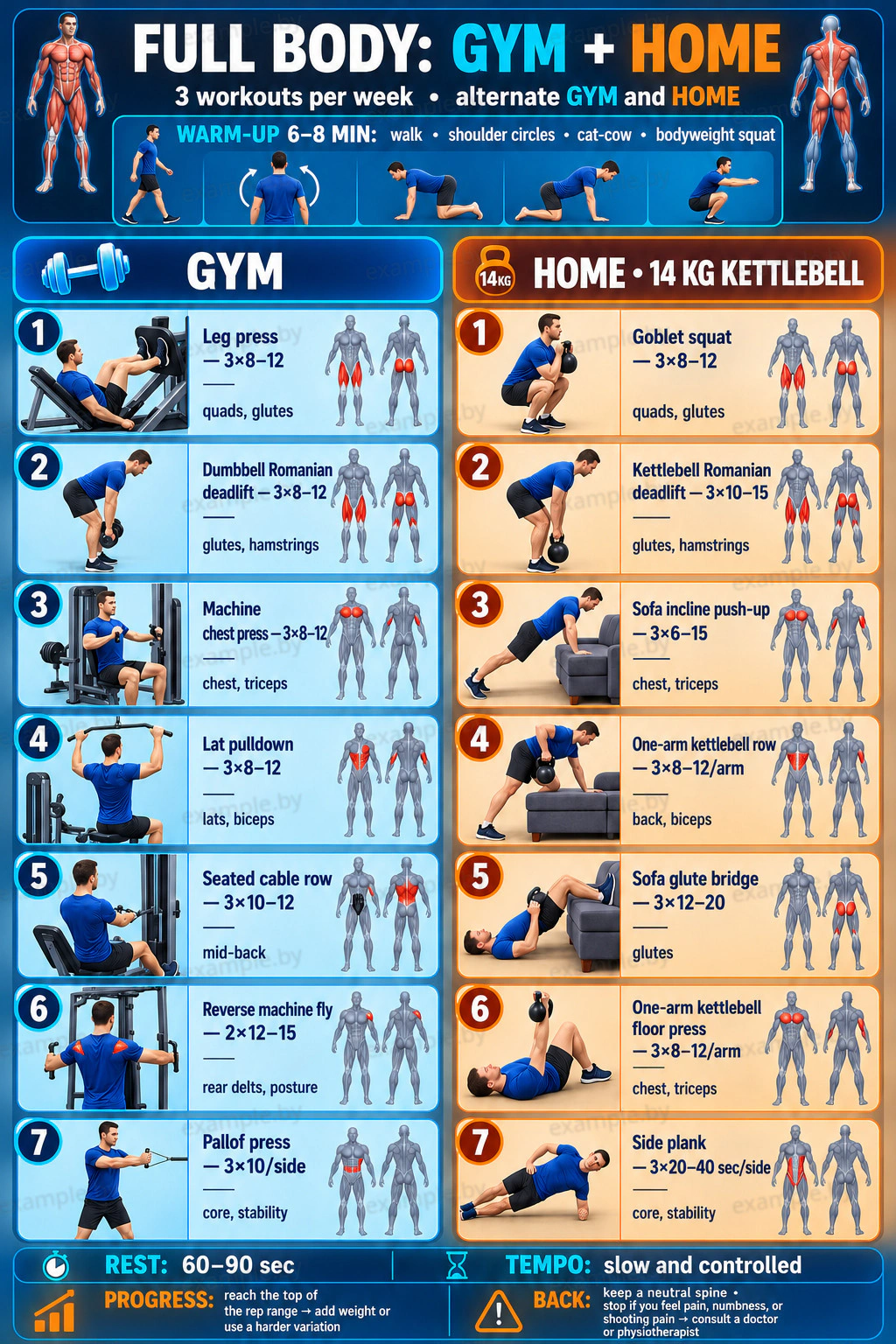
Full-Body Home Workout with One Kettlebell and a Couch
 Medicine · 11.10.26
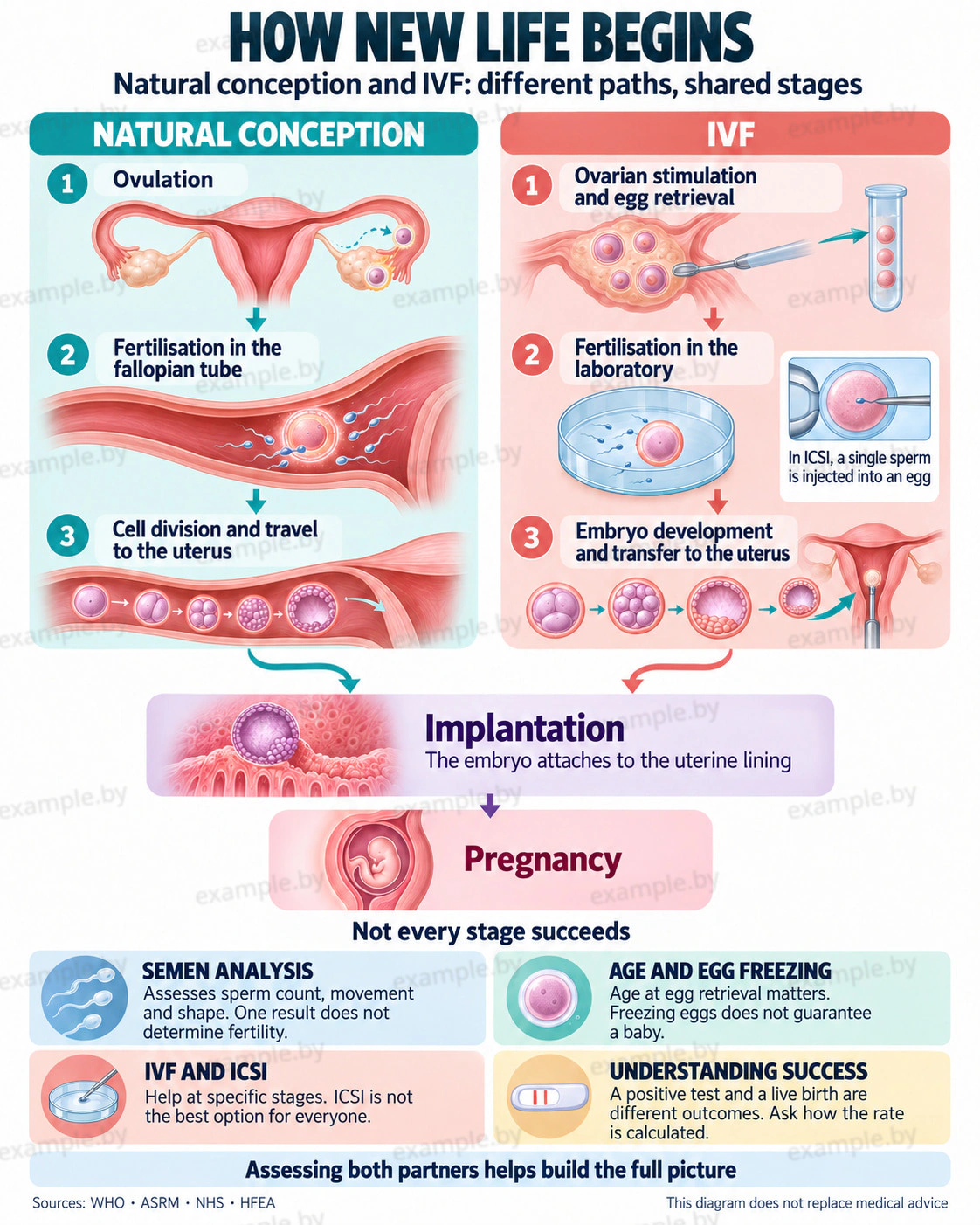
How Life Begins: From Conception to IVF
 Body · 10.10.26
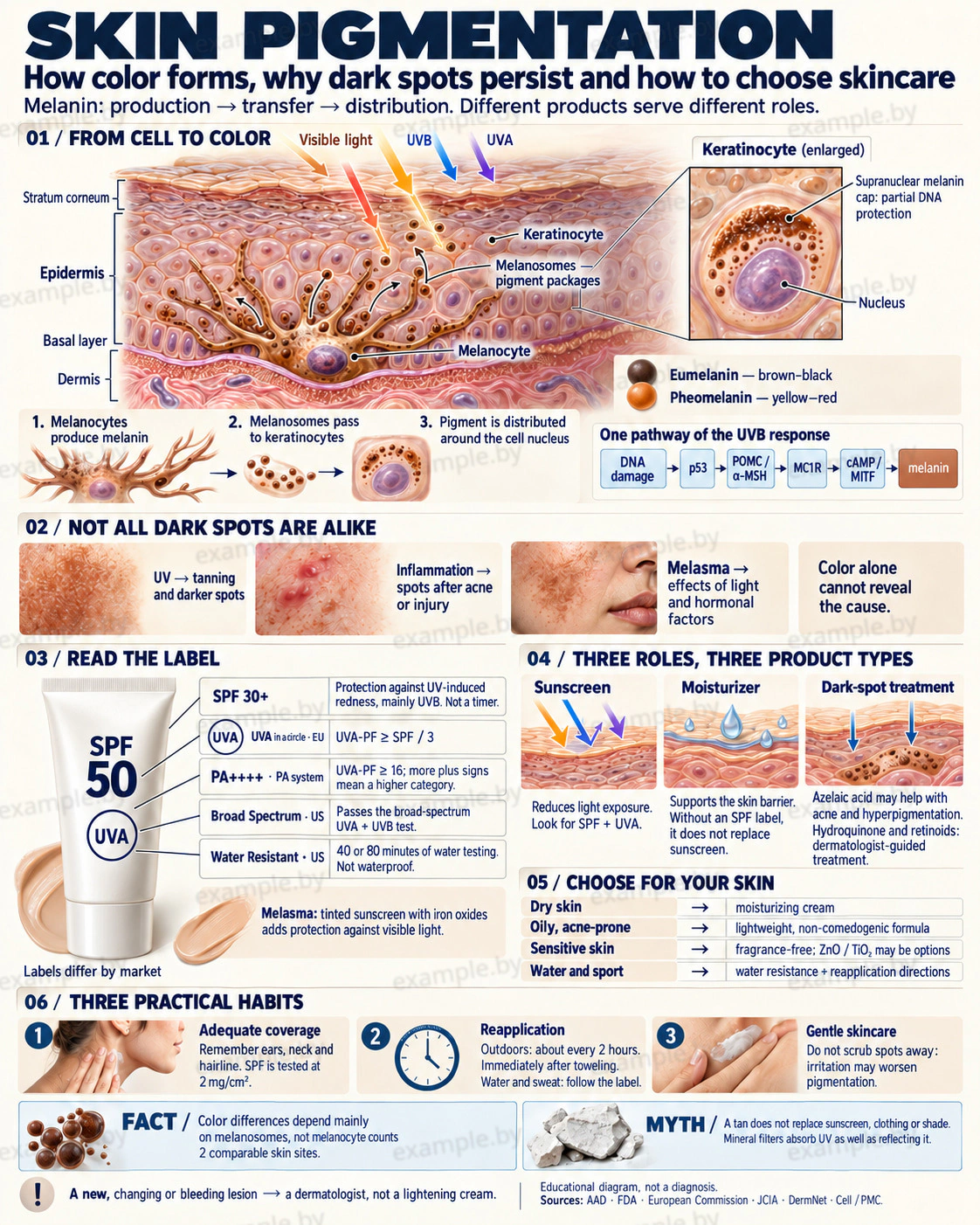
Skin Pigmentation: How Cells Talk to the Sun
 Body · 03.10.26
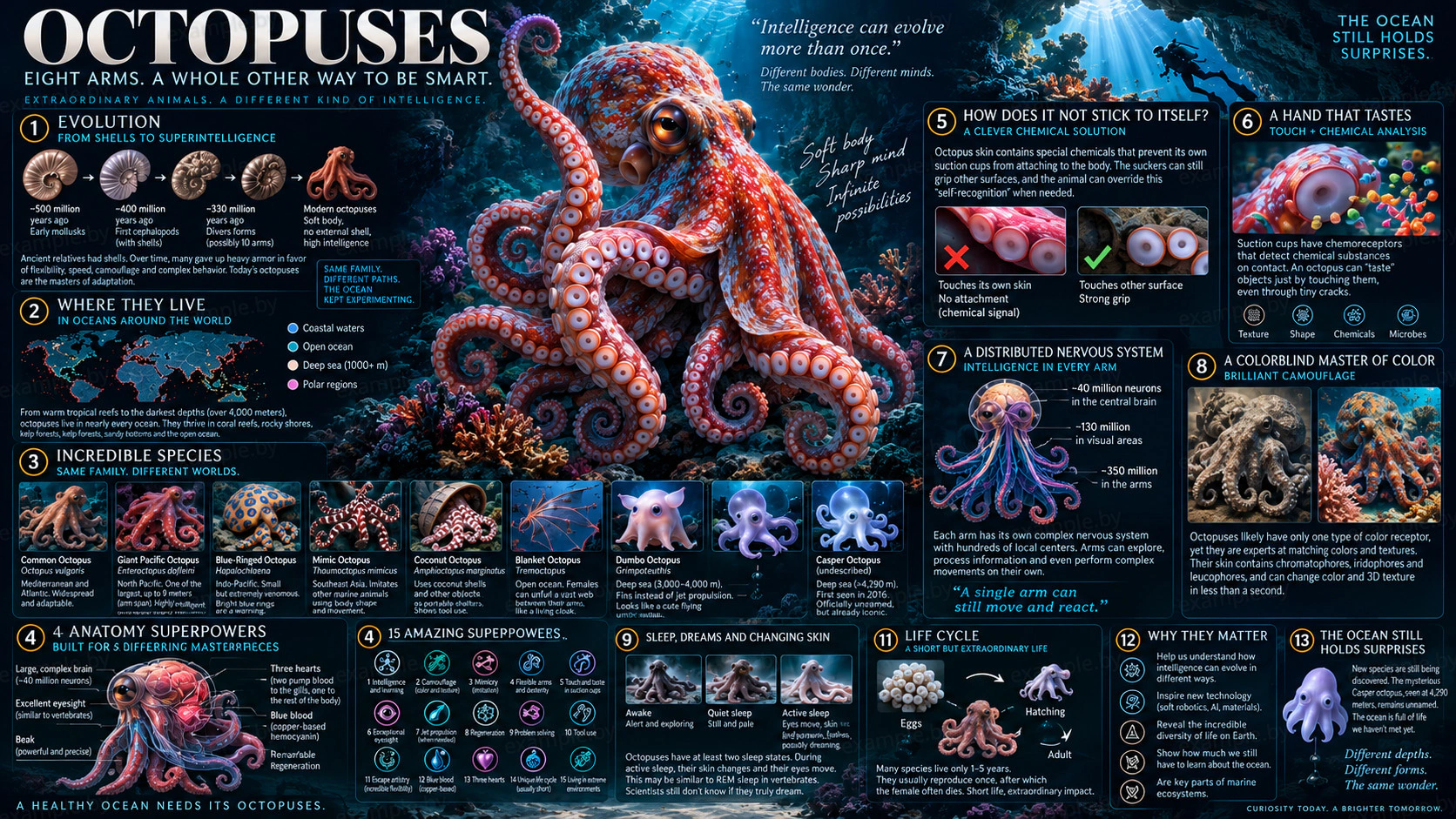
Octopuses: Evolution’s Alternative Experiment
 Medicine · 03.10.26
Heartburn: Why Stomach Contents Flow Back Up
 Body · 03.10.26
The Science of Tanning: Why There Is No Safe Tan
 Medicine · 03.10.26
Sleep: What Really Happens to Us Every Night
 Medicine · 05.10.26
How Helicobacter pylori Survives Stomach Acid
 Medicine · 03.10.26
What DNA Tests Can Actually Reveal
 Culture · 27.10.26
Why One Family Can Have Different Surnames