Full-Body Home Workout with One Kettlebell and a Couch
Master key movement patterns across all major muscle groups without gym machines: a complete routine, safety cues, and weight selection tips.
- Section
- Body
- Date
- Reading
- 5 minutes
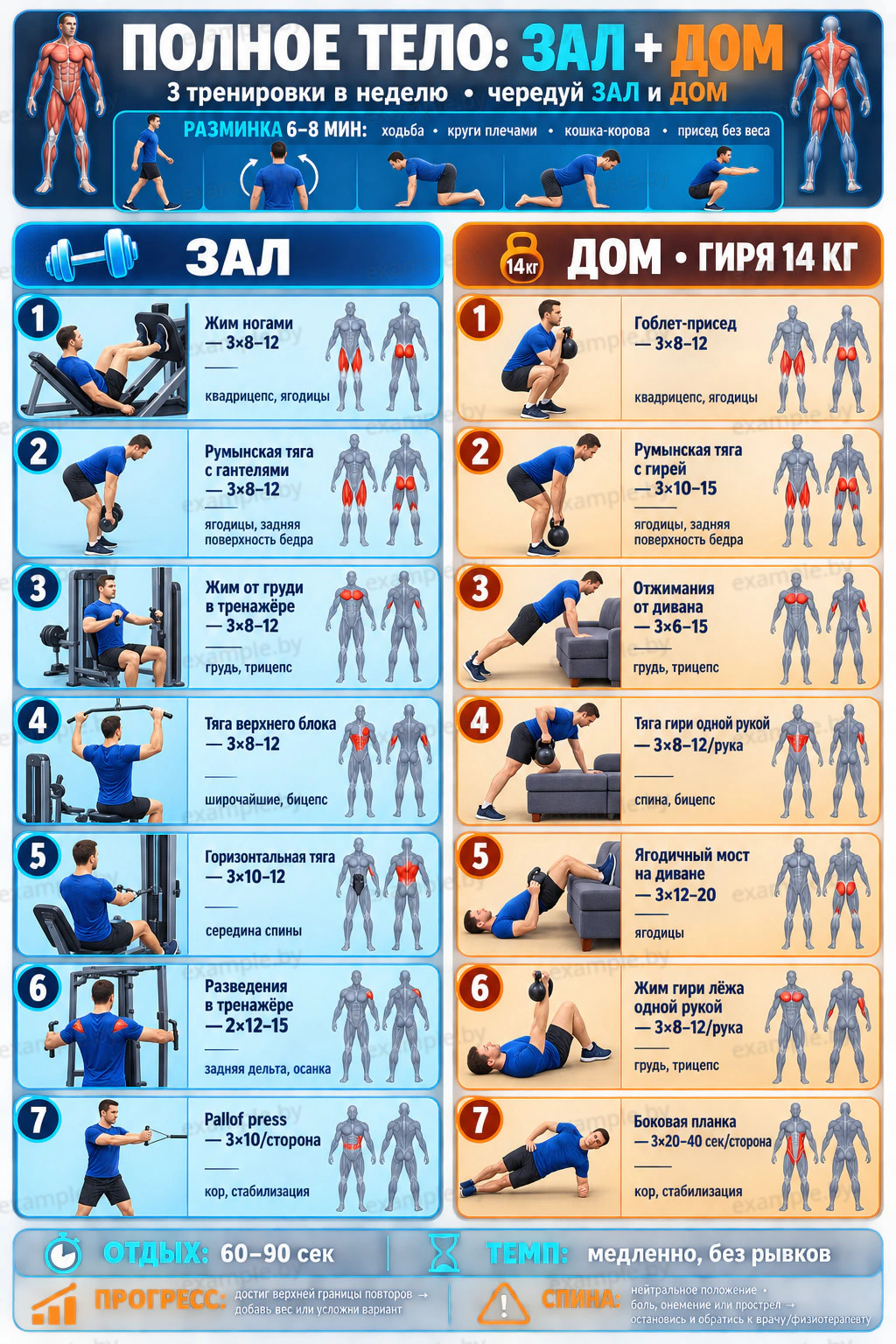
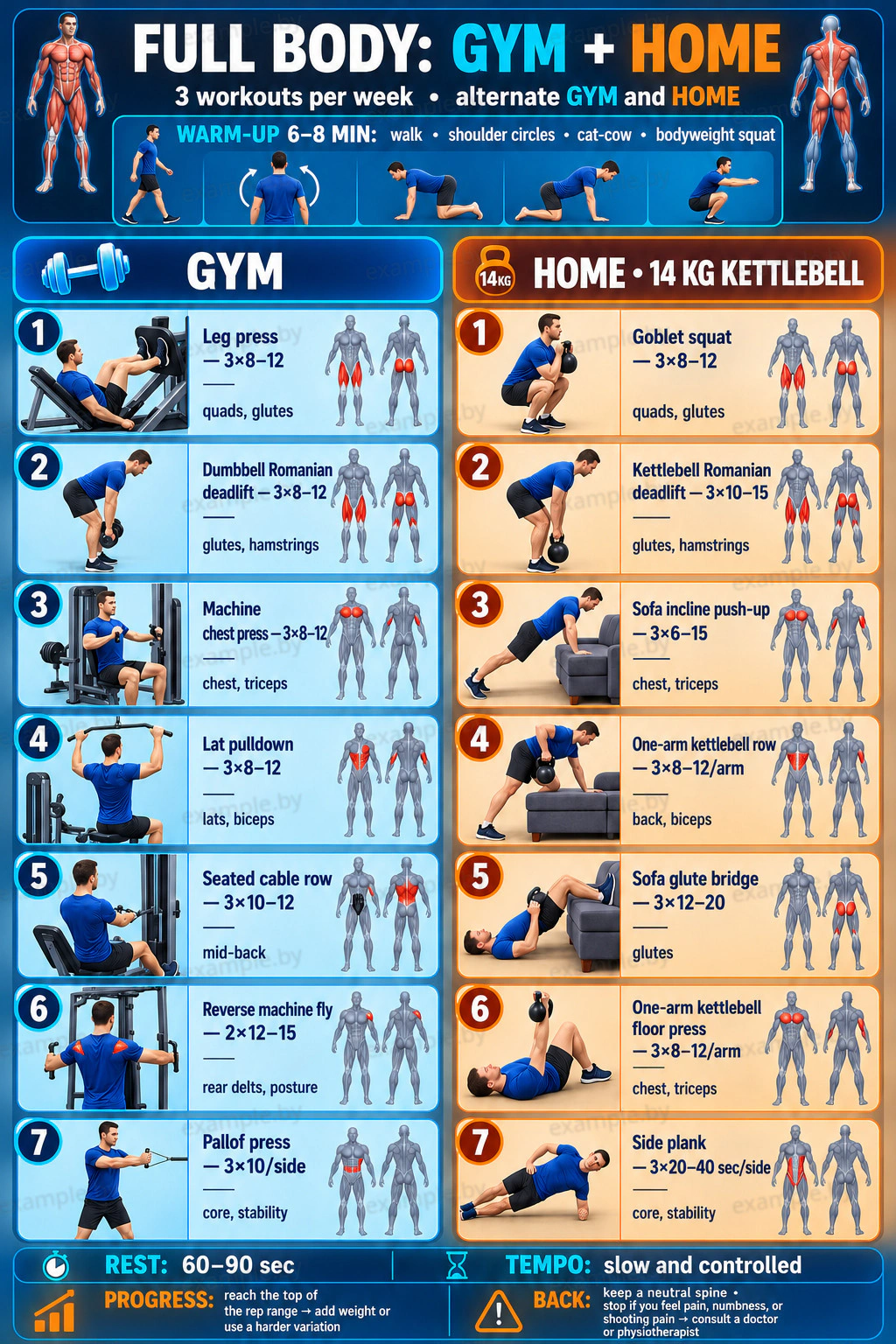
An effective strength workout doesn't require dozens of isolation machines. The body doesn't need specialized gym equipment; it needs fundamental movement patterns: squatting, hinging, pushing, pulling, extending the hips, and keeping the core stable. Guidelines from the World Health Organization and the American College of Sports Medicine align: adults only need to train their major muscle groups two to three times a week. You can meet these requirements right in your living room using body weight, a dense mat, a couch, and a single kettlebell.
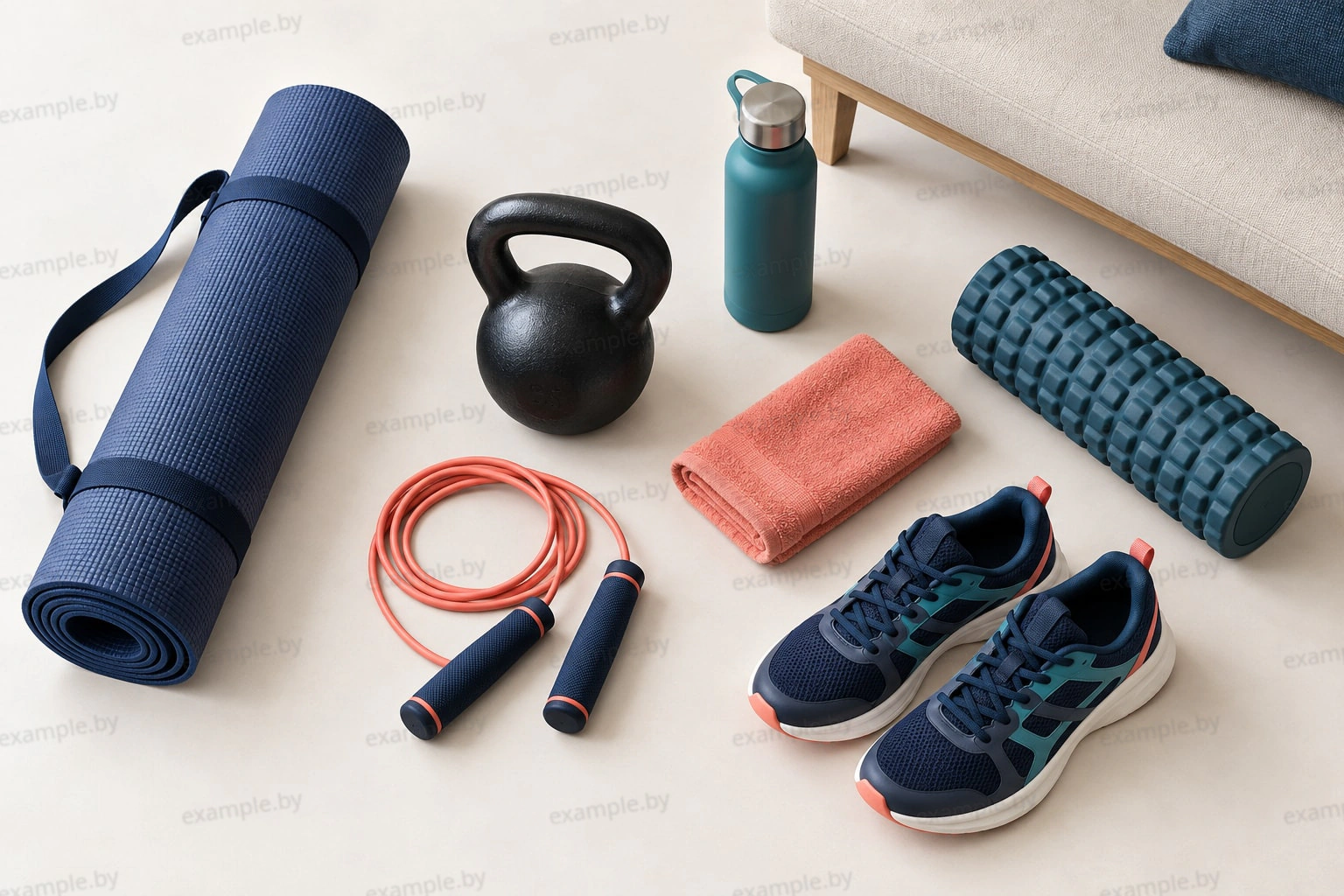
What You Actually Need
Most home workout machines quickly turn into clothes racks. A practical setup is far more modest:
Free space: an area of roughly 2 by 2 meters, free of slippery rugs, loose wires, and sharp furniture corners.
Non-slip mat: protects your knees, elbows, and pelvis during floor exercises. A firm, dense surface works best for balance.
Sturdy support: a heavy couch or solid bench that will not slide when you lean on it with your hands or feet.
Free weight (such as a 14 kg kettlebell): provides working resistance for the legs and back. Beginners are safer starting with 6–10 kg dumbbells or kettlebells, or long resistance bands, for presses and rows.
Jump rope and foam roller: a jump rope works well for a quick, interval-based warm-up, while a foam roller helps relieve local tightness in the thigh muscles and thoracic spine (never roll the lower back or joints).
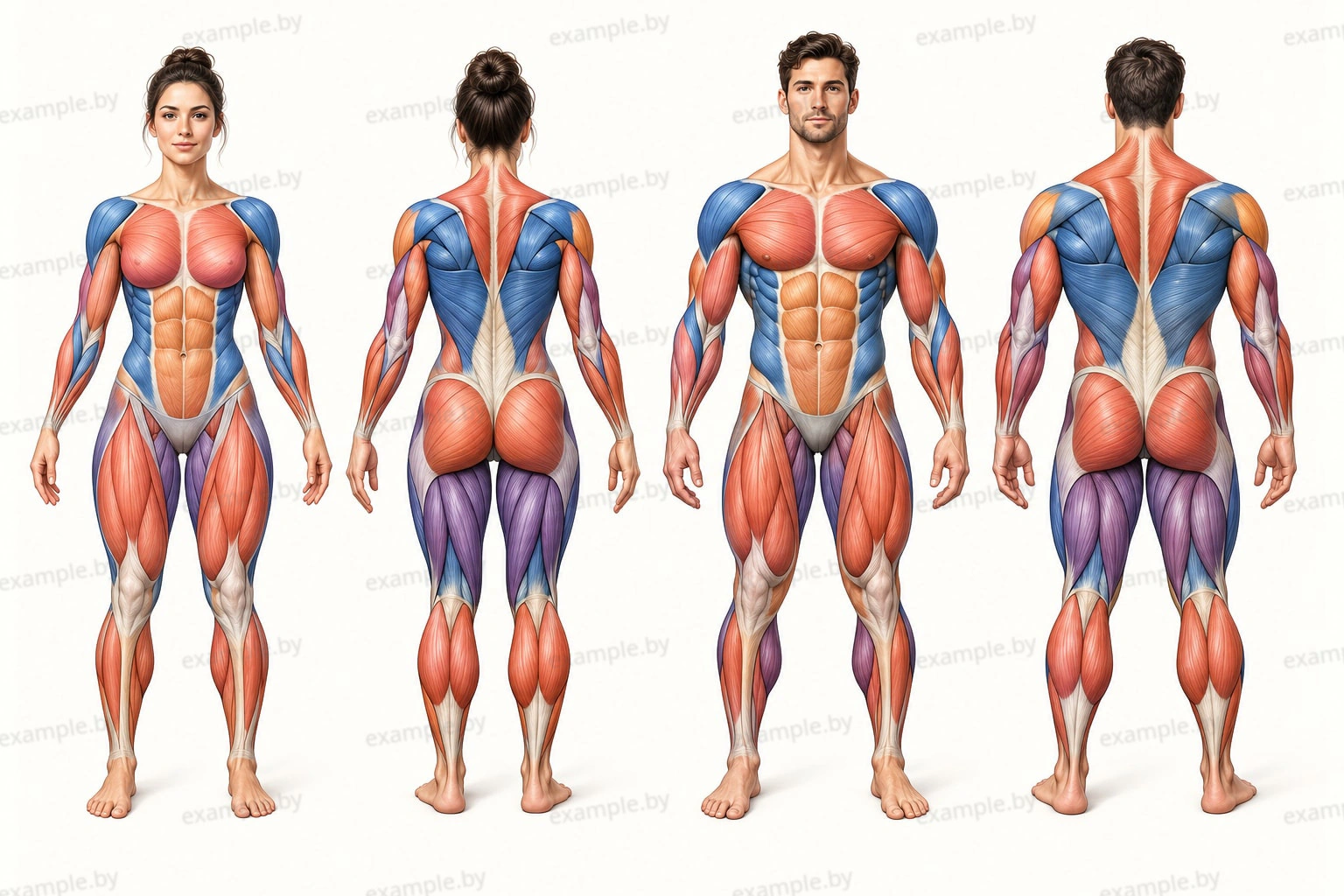
Movement Anatomy: Which Muscles Work
Natural movement patterns always recruit entire kinetic chains. Anatomical principles and biomechanics are identical for men and women, so dividing compound exercises by gender makes no sense:
Glutes and hamstrings: extend the hips, stabilize the knees, and protect the lumbar spine when lifting objects off the floor.
Quadriceps: extend the knees and control deceleration when taking stairs or squatting.
Back and scapular muscles: the latissimus dorsi, trapezius, and rhomboids support the shoulder girdle, countering the hunched posture caused by long desk hours.
Chest, shoulders, and triceps: the pushing group responsible for pressing your own body weight away from the floor or a support surface.
Core and pelvic floor muscles: the rectus abdominis, obliques, and transverse abdominis work alongside the diaphragm to create an internal brace that shields the spine from twisting and compression.
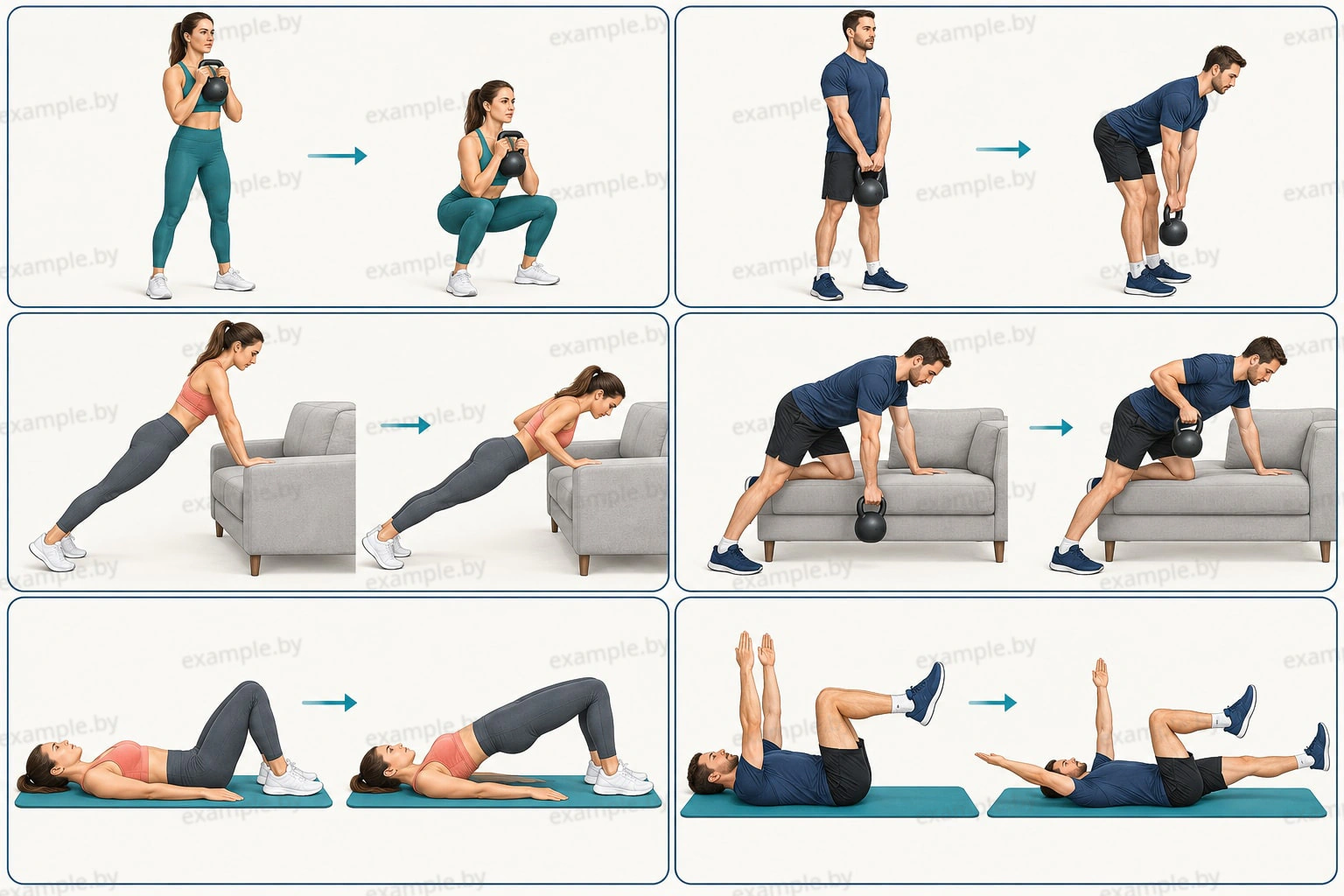
Six Exercises That Build the Workout
The program combines six simple patterns into a coherent routine:
Goblet squat: hold the kettlebell with both hands against your chest. If the weight is too heavy, perform bodyweight squats down to the couch cushion.
Hip hinge (Romanian deadlift): push your hips back with a slight bend in the knees, keep your spine neutral, and let the kettlebell travel close along your legs.
Couch push-ups: an elevated surface reduces the load on your shoulders and helps you maintain a straight torso. The higher the support, the easier the movement.
Supported single-arm kettlebell row: place one hand and knee on the couch, and pull the kettlebell toward your hip by driving the elbow back, keeping the torso square.
Glute bridge: performed lying on the mat. Drive through your heels to raise your hips using your glutes, avoiding excessive arching in the lower back.
Dead bug: lie on your back and alternate extending opposite arm and leg while keeping your lower back firmly pressed into the floor. This drill trains core stability during limb movement.
Sample Training Routine
Perform this routine two to three times a week, allowing at least 24 hours of rest between sessions:
No. | Exercise | Volume | Main Focus |
|---|---|---|---|
1 | Warm-up: marching, light jump rope, joint mobility | 5–8 min | Warming up and coordination |
2 | Goblet squat (or couch squat) | 2–3 sets of 8–12 reps | Quadriceps and hips |
3 | Kettlebell Romanian deadlift | 2–3 sets of 8–12 reps | Glutes and hamstrings |
4 | Couch-supported push-ups | 2–3 sets of 6–12 reps | Chest, shoulders, and triceps |
5 | Supported single-arm kettlebell row | 2–3 sets of 8–12 reps per side | Latissimus dorsi and scapular stabilizers |
6 | Floor glute bridge | 2–3 sets of 12–15 reps | Hip extensors |
7 | Core stabilization (Dead bug) | 2–3 sets of 6–10 reps per side | Deep abdominal muscles |
8 | Cool-down: light walking, gentle foam rolling | 4–6 min | Lowering heart rate and relaxation |
To estimate session time, customize reps for your body weight, and run an interval timer, use the workout calculator below.
Managing Intensity and When 14 kg Is Too Heavy
The rule of thumb: finish every set with 2–3 clean repetitions in reserve (RIR 2–3). Avoid training to absolute failure, where movement form breaks down.
The weight is too heavy if:
you need to jerk your torso or use momentum to start the movement;
your shoulders become uneven or your torso twists during rows;
your knees cave inward or your heels lift off the floor during squats;
you cannot lower the weight under control over 2–3 seconds;
you instinctively hold your breath, feel downward pressure on the pelvic floor, or experience joint pain.
Precautions
This program is designed for healthy individuals. If you have symptomatic herniated discs, severe scoliosis, pelvic floor dysfunction, cardiovascular conditions, or if you are pregnant or in early postpartum recovery, consult a physician or physical therapist before starting this routine or selecting weights.
Liked it? Save it for later.
 Body · 18.10.26
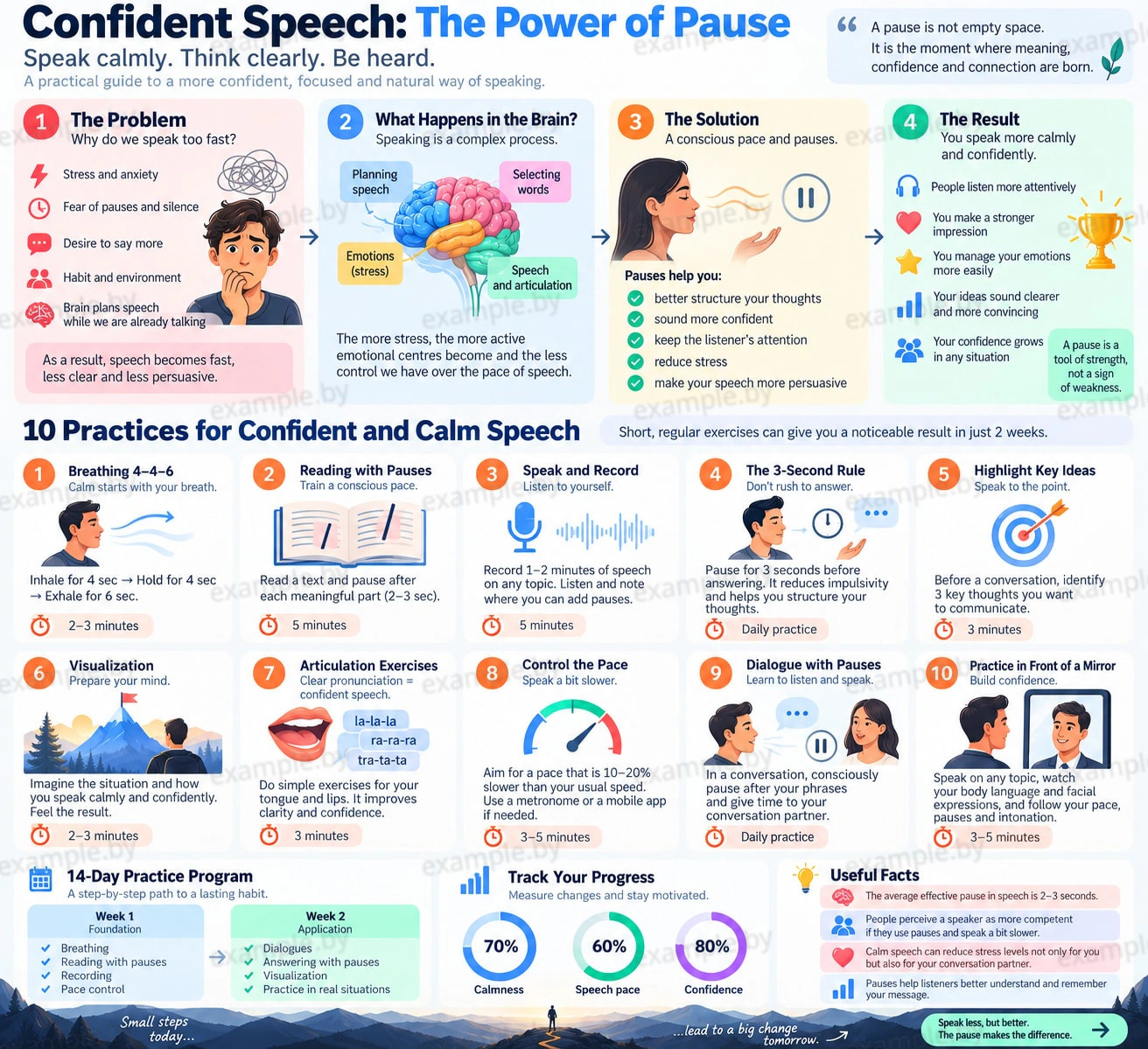
The Art of the Pause: How to Speak Calmly and Confidently
 Body · 15.10.26
Who Pays for Heat: Why a Lizard Can Be Hotter Than a Bird
 Technology · 13.10.26
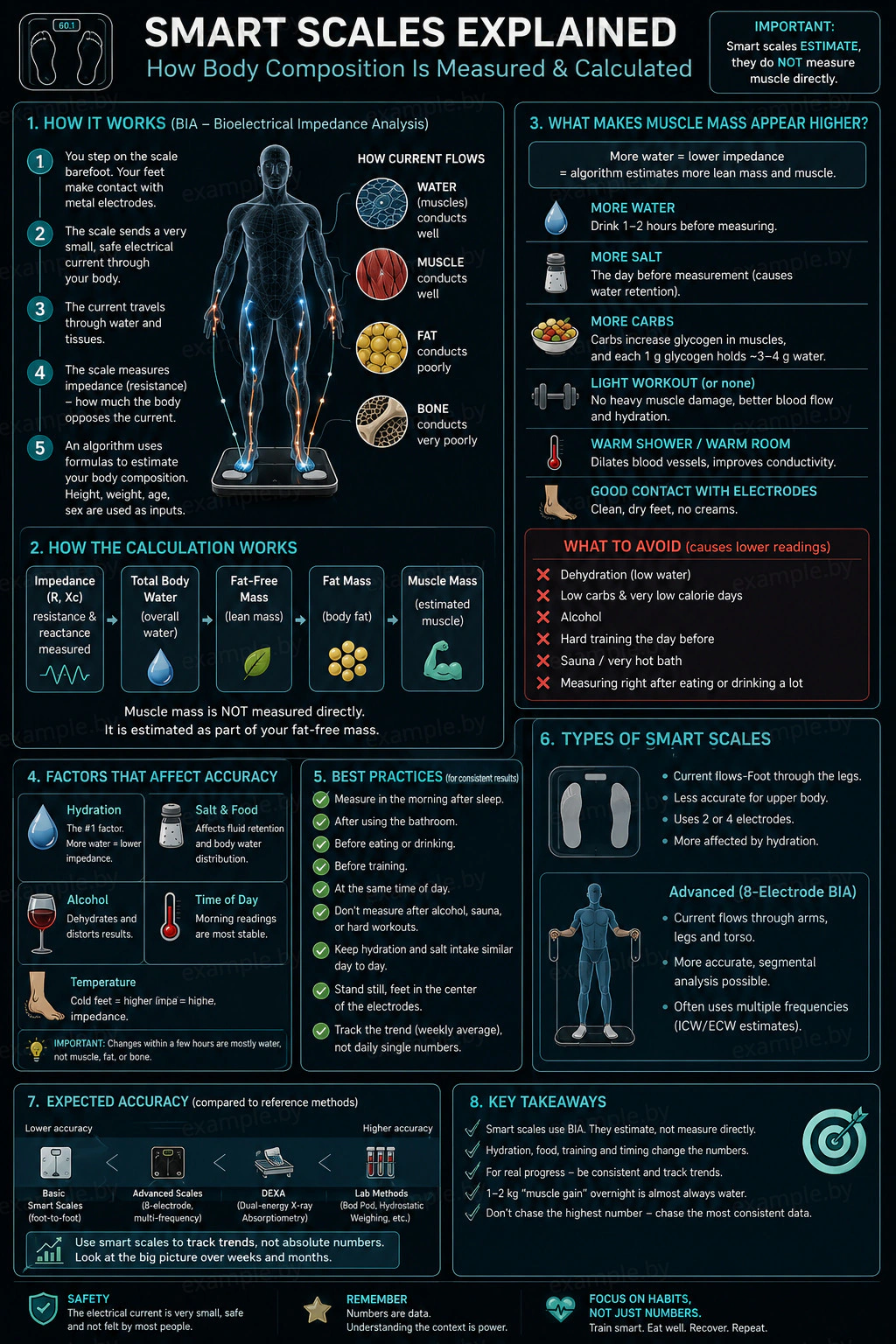
How Smart Scales Track Muscle and Water
 Medicine · 11.10.26
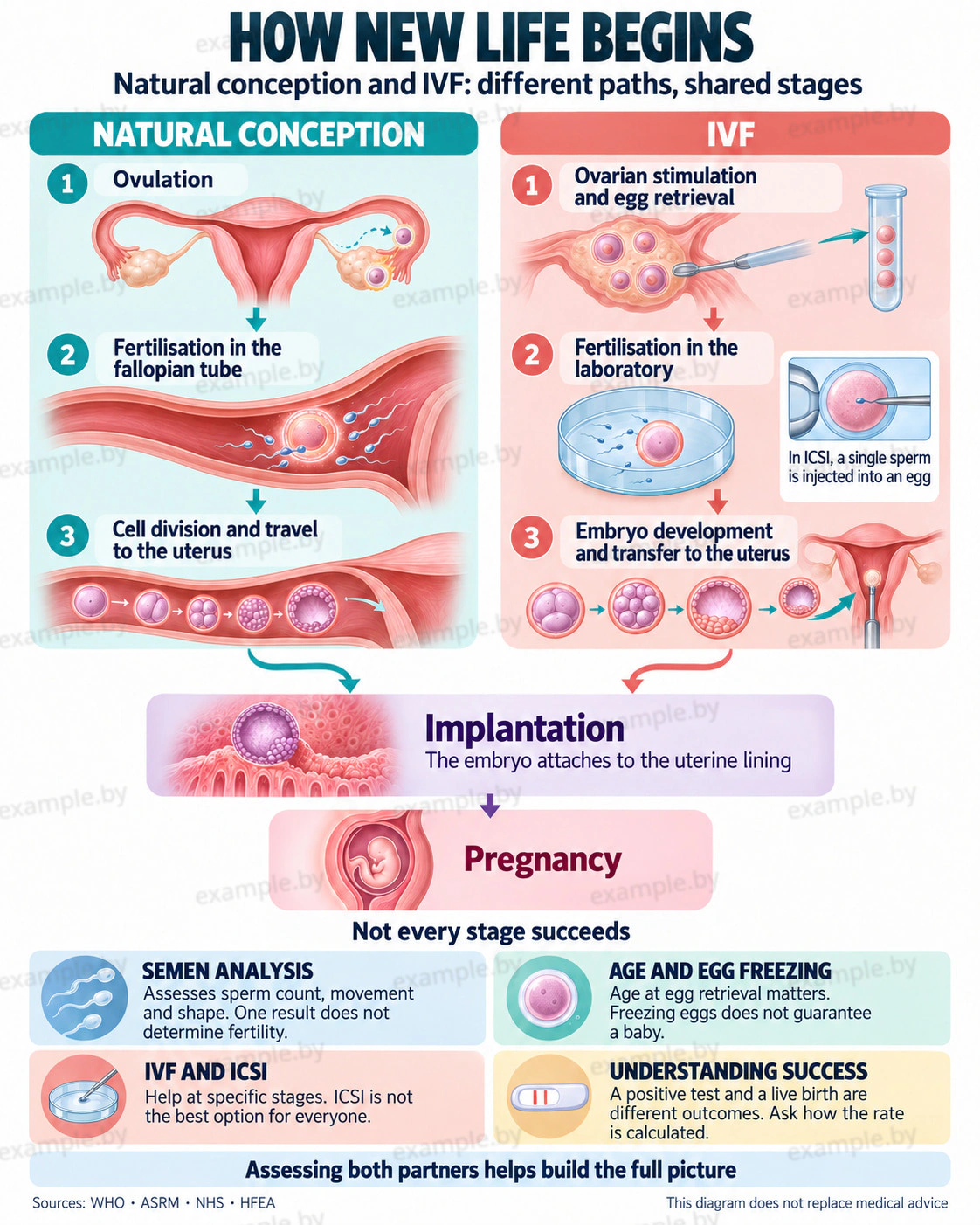
How Life Begins: From Conception to IVF
 Body · 10.10.26
Skin Pigmentation: How Cells Talk to the Sun
 Body · 03.10.26
Octopuses: Evolution’s Alternative Experiment
 Medicine · 03.10.26
Heartburn: Why Stomach Contents Flow Back Up
 Body · 03.10.26
The Science of Tanning: Why There Is No Safe Tan
 Medicine · 03.10.26
Sleep: What Really Happens to Us Every Night
 Medicine · 05.10.26
How Helicobacter pylori Survives Stomach Acid
 Medicine · 03.10.26
What DNA Tests Can Actually Reveal
 Culture · 27.10.26
Why One Family Can Have Different Surnames