How to Gain Reach on UGC Platforms
Nine principles for creating viral articles on open blog platforms, from managing debate in the comments to turning hot-button topics into real business value.
- Section
- Technology
- Date
- Reading
- 4 minutes

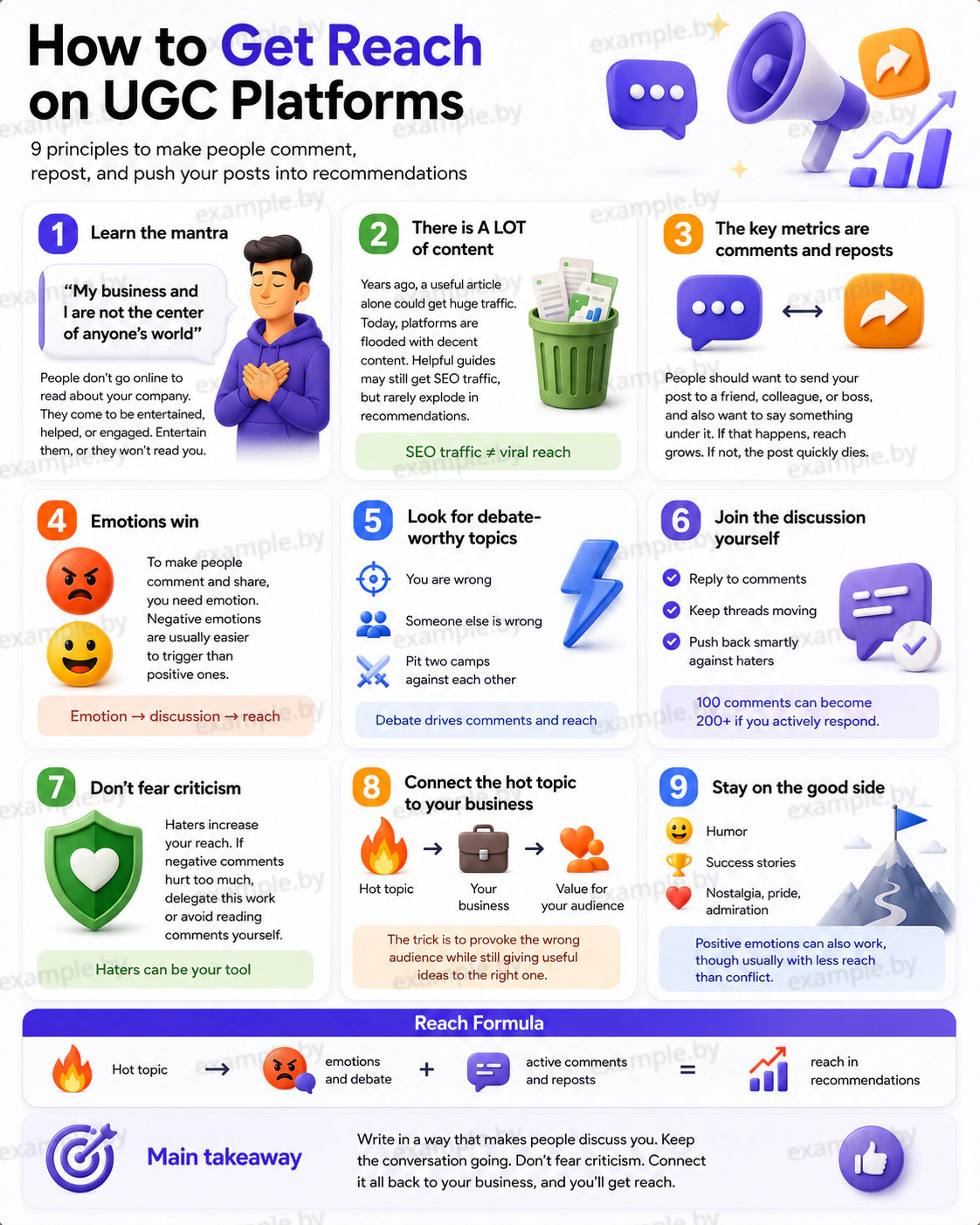
Recommendation algorithms on UGC platforms such as Habr or VC promote pieces that provoke a lively reader response rather than tidy corporate reports. For an article to rack up tens of thousands of views right away, it needs shares and active discussion threads. Nine fundamental rules explain how this mechanism works and how to turn audience attention into business results.
1. Reader interest over corporate reports
The primary mantra for publishing on open platforms is simple: nobody really cares about a business for its own sake. Users quickly scroll past yet another company case study, a product update, or a formal demonstration of expertise. People go online to be entertained or to find an answer to a burning problem; if a piece fails to engage them, no one will read it.
2. Content overload
A decade ago, a high-quality, informative article was enough to hit the top: competition was low. Today, agencies, freelancers, and neural networks churn out thousands of expert articles every day. Useful guides can generate steady background traffic from search engines, but they will not break into a platform's recommendation feed without active engagement.
3. The core metrics: comments and reposts
For viral reach, two reader actions are critical: the urge to send the post to friends or colleagues, and the urge to sound off below. If the text lacks this incentive, it picks up a few hundred views and drops off the platform's radar, leaving the author to rely solely on long-term search traffic.
4. The power of emotional resonance
For readers to start commenting and sharing, the article must elicit an emotion. Sparking negative reactions is noticeably easier than positive ones. Earning a hundred complimentary comments demands an exceptional piece of work, whereas outrage over a mistake or a controversial claim triggers a wave of comments almost instantly.
5. Finding topics for discussion
Three formats work well for framing a controversial topic:
- The author is wrong. An unusual, provocative, or unpopular stance, admitting mistakes, or highlighting non-obvious upsides where everyone else sees only flaws.
- Someone else is wrong. Deconstructing other people's mistakes, critiquing questionable tools, or uniting readers against a common pet peeve.
- A clash of opinions. The ultimate viral play: two irreconcilable camps collide in the comments. While users argue back and forth, algorithms register the surge of activity and keep pushing the article to the top.
6. Author engagement in the comments
Publishing the article accounts for only half the result; the other half is forged in the comment threads. It is crucial to respond to readers, fuel interesting debates, and take criticism in stride. Replies are not written to win a specific argument—all the other readers see them too. Calm, fact-based points or sharp humor work far better than taking offense, and replying to every participant can swiftly double the post's total comment count.
7. Taking criticism in stride
Without a readiness to face negativity, there is no point in being on UGC platforms. Hostile commenters directly benefit the author: they drive up engagement metrics and propel the post into recommendations. If reading such feedback is emotionally taxing, it is better to hand community management to a PR specialist or stick to traditional reference articles tailored for search engines.
8. Linking hot topics to business
Provoking heated discussions is easy; turning them into commercial gain is harder. The author's task is to avoid alienating their target audience. The piece should irk the broad mass of casual readers who will boost it with their comments, while simultaneously communicating sound, valuable insights to the prospective clients the business came to reach in the first place.
9. A positive alternative
You can also capture attention on the bright side: through humor, pride, or admiration. These pieces are harder to scale than heated debates, but they still work. A proven framework is the story of overcoming steep obstacles. The tougher the challenge and the more impressive the protagonist's result, the more eager readers are to share the story and discuss someone else's success.
Liked it? Save it for later.
 Technology · 16.10.26
The Life Cycle of a Star: From Nebula to Black Hole
 Technology · 15.10.26
How Vector Search Works: Chroma, pgvector and Qdrant
 Technology · 13.10.26
How Smart Scales Track Muscle and Water
 Technology · 07.10.26
Capillary Action: Why Water Climbs Upward
 Technology · 04.10.26
AI Benchmarks: Testing Models and Why Leaderboards Lie
 Medicine · 05.10.26
How Helicobacter pylori Survives Stomach Acid
 Medicine · 03.10.26
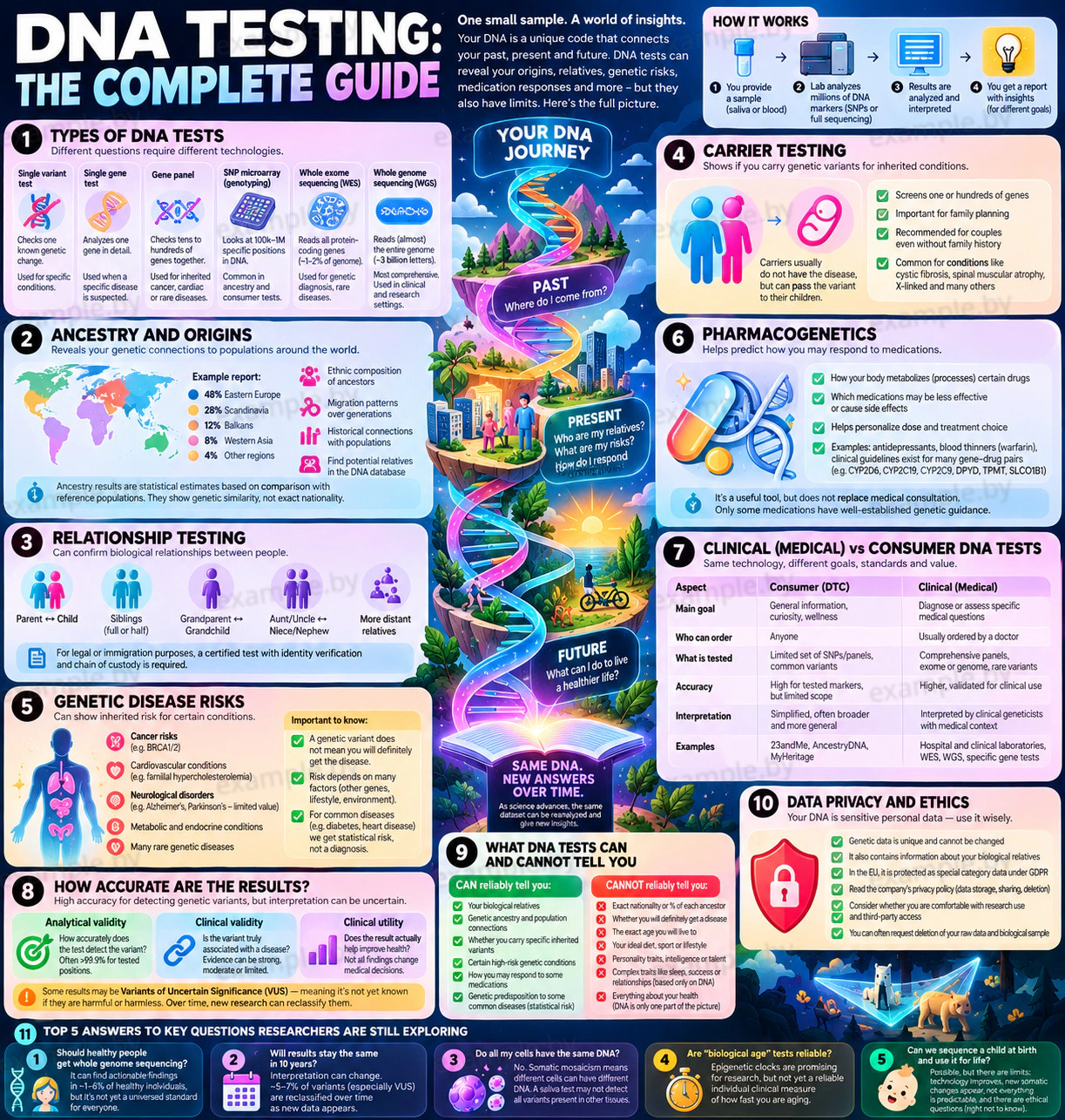
What DNA Tests Can Actually Reveal
 Culture · 27.10.26
Why One Family Can Have Different Surnames
 Biology · 19.10.26
Why Cats Purr and What the Sound Really Means
 Culture · 18.10.26
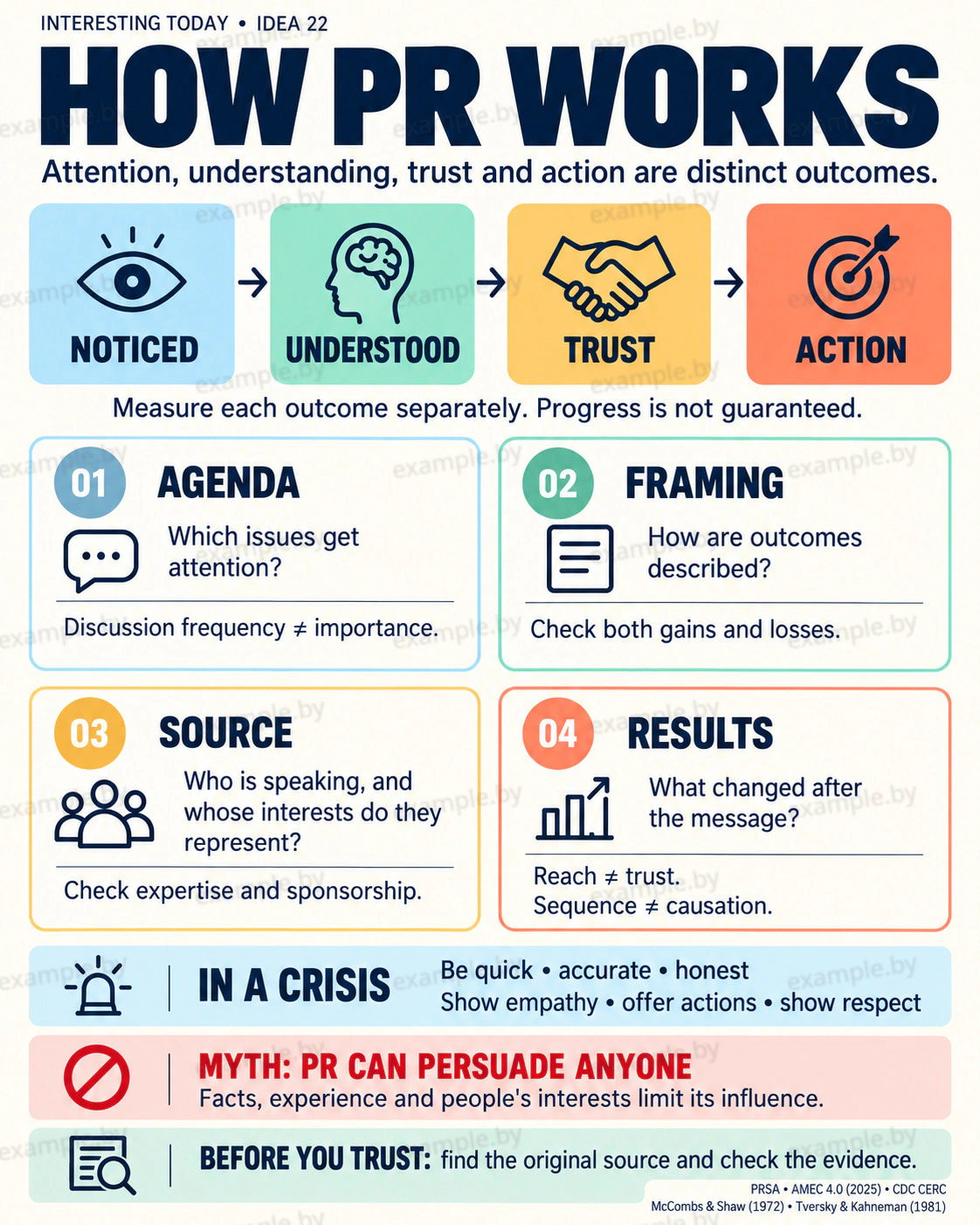
How PR Works: Mechanisms, Limits and Trust
 Society · 18.10.26
Cypriot Pound or Lira: A Currency with Two Names
 Body · 18.10.26
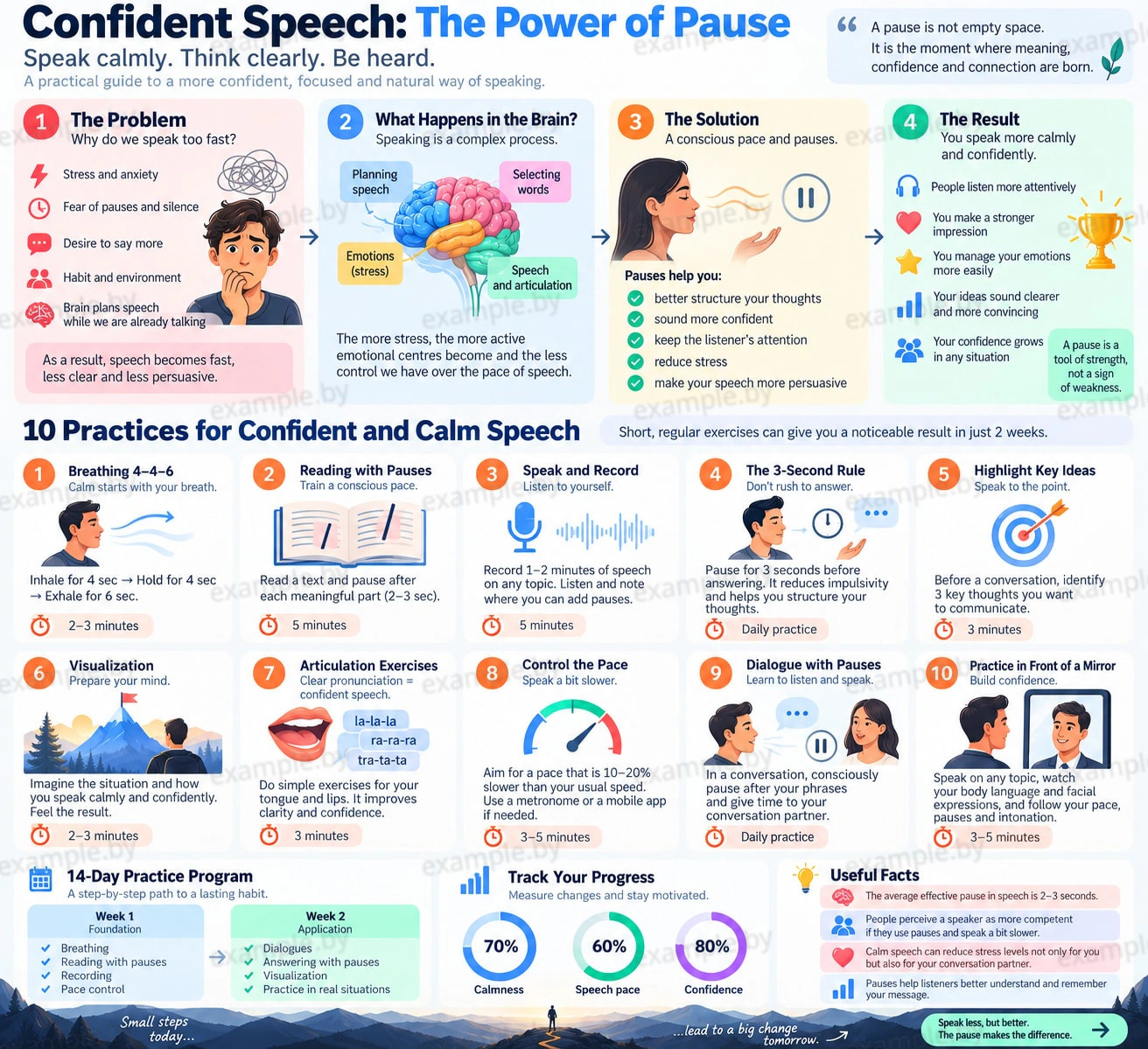
The Art of the Pause: How to Speak Calmly and Confidently